

C.S. Lewis has been breathing down my neck for twenty-plus years. It’s a running observation among those who know me well that I can hardly write something without referencing the writer-philosopher-theologian extraordinaire.1 (I often give myself that challenge and routinely fail—this essay will be a landslide for the opposition.)
My imagination and interior life were set on a path of flaming transformation after reading The Lion, the Witch, and the Wardrobe for the first time in 2005. Having written nigh 60,000 Narnia-related and inspired words since then, I consider myself firmly set among those who care intensely about Narnia and the world in which it exists.
However, some of the reactions I’ve witnessed to recent announcements about Greta Gerwig’s adaptation of The Magician’s Nephew have made me second-guess this belonging. It seems that some cannot extend the spirit of Narnian welcome (as exemplified in my favorite Narnia story, The Horse and his Boy) to those who dare chart a silver screen course for Charn.
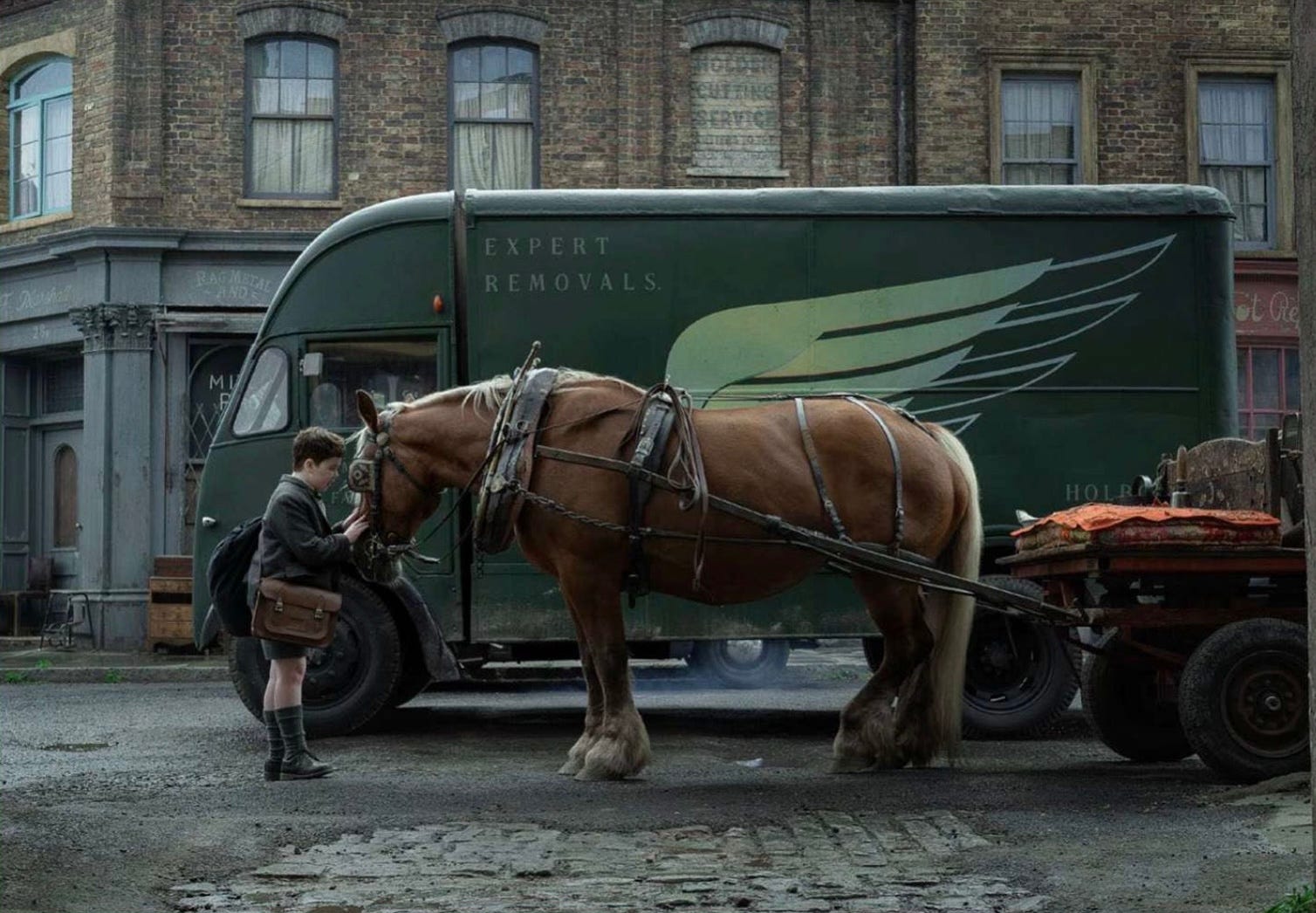
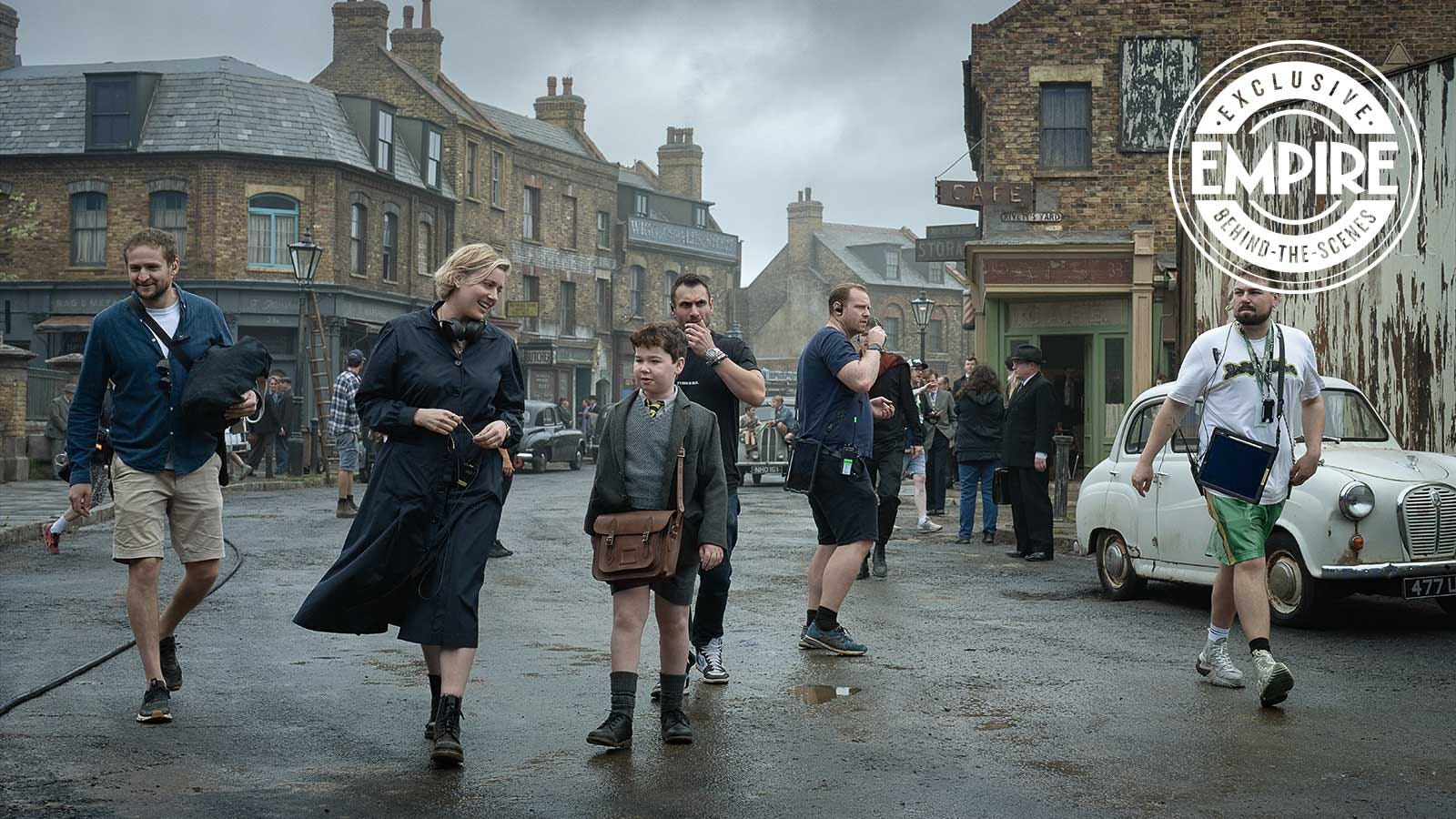
Eleven days ago, the trickle of information about Greta’s adaptation became a steady stream thanks to an Empire feature story which gifted us some astonishing visuals. In one discord server I’m in, mature optimism in reaction to the logo (the first item that dropped) transformed into outrage when, a few hours later, it became clear that Meryl Streep was voicing Aslan, the cosmic lion deity and mysterious Son of the Emperor-over-the-Sea. Someone I respect as a friend and fellow writer declared the film a “deathwork” and expressed his desire for it to ‘fail utterly and spectacularly.’2
Admittedly, if one scours the corners of the web haunted by Narnia fans or religious and social conservatives, one will find that this adaptation has always been held at arm’s length for several reasons:
General distrust of a director who identifies as a “feminist”3—because no feminist should ever be trusted with C.S. Lewis’ work obviously.
General distrust of Netflix as a Big Corporation desiring to churn out content for profit. Ergo, the big company can’t possibly care about the story or what “real” fans want.4
Early mention that this film would be influenced by a rock ‘n’ roll aesthetic and rock ‘n’ roll icons.
Early rumors that Meryl Streep would voice Aslan.
Resituating the story from early 1900s to 1955, creating downstream complications for any future adaptations in Greta’s corner of what might rapidly become the Narnia Multiverse.
Travel down this path and you just don’t have The Magician’s Nephew anymore, or so the argument goes. I can stomach that argument.
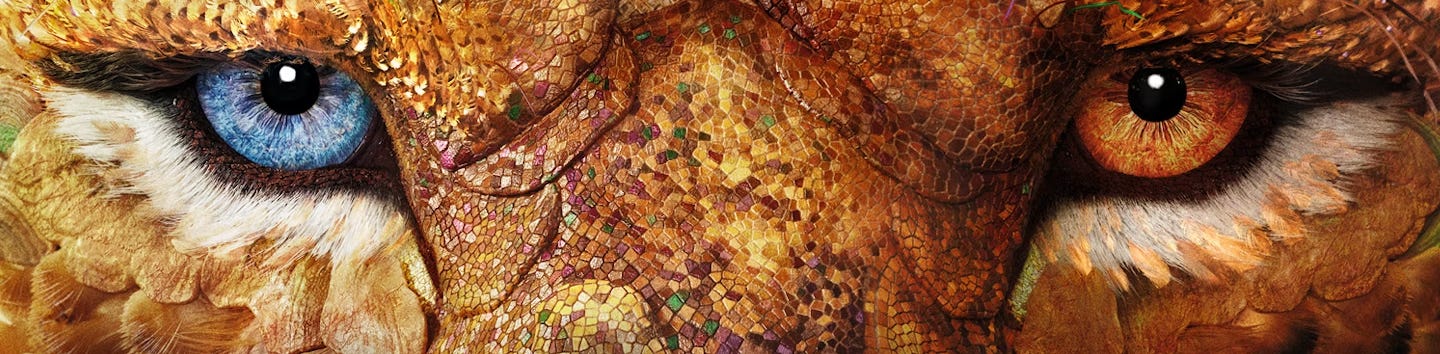
What I cannot stomach is the argument that Greta’s film erases, perverts, or destroys The Magician’s Nephew—regardless of how much one might end up not liking it—or that a heterochromatic lion voiced by an actress some consider the greatest of her generation is an assault on Christianity. You know things are bad when The Daily Wire’s initial tact is Tim Rice’s chill out, it’s just a movie takedown of conservative pearl-clutching. Rice’s scolding was so shocking to The Daily Wire’s readership that the publication subsequently hired Bethel McGrew to argue for the other side.
I understand the general outrage of this is not the story I was expecting to see—I imagine we’ve all been there more than once lately—but if Narniacore is, well, core to your faith, you may have made an idol in C.S. Lewis’ image.
This, of course, is not the first time unreasonable outrage has conflated with news about a film pre-release. We did this with The Odyssey, you’ll recall. A slightly different group of people fomented the outrage, but the Venn diagram, I suspect, has many of the usual suspects. Christopher Nolan suddenly became a Western Civ iconoclast—and then the movie came out, and it was just a movie. And a far better movie than some thought it would be—one which nearly made Homer’s story the most sought-after book buy in the U.S.
The current dialogue around The Magician’s Nephew is the first time I’ve felt so deeply cut by the discourse. Partly because some of the people involved in that discourse are more than just internet acquaintances obscured by nerdy usernames and profile pics. Partly also because Narnia is my #1 fandom. I consider myself a tough cookie but I’ve never felt sadness settle in my soul for such long hours (and days) like it did last week after participating in the aforementioned discord chat.
What I’ve come away thinking is that I’m not quite sure those who despise and wish ill on a work of art they haven’t seen are quite the best ambassadors for Narnia at all. The suggestion is subliminal in these conversations: those who do not share hatred about Greta’s adaptation are not true friends of Narnia and cannot possibly love Aslan.5 I cannot imagine such individuals walking with a swing, chatting and laughing, through the streets of Tashbaan.
…they walked with a swing and let their arms and shoulders free and chatted and laughed. One was whistling. You could see that they were ready to be friends with anyone who was friendly and didn’t give a fig for anyone who wasn’t. Shasta thought he had never seen anything so lovely in his life.
Aslan and the divine family
My feelings about Greta’s film in this moment are partly fueled by an ongoing journey in biblical studies.
My wife and I recently read The Unseen Realm with a couple of friends. It’s a book by late Old Testament scholar Michael Heiser whose work is all about recovering the worldview of the ancient ancient near east and the context from which emerged the record we now call the Bible.
The people who first heard from the God who would eventually reveal himself in Jesus did not have the static view of deity that we Western religious types have today. They considered their god as one of many similar divine beings, part of a “divine family,” more than just the triune godhead and a bunch of servient angels. This was a view shared by the people around them—the people we consider heathen.
Our translations and interpretations of Scripture occlude this reality. We assume there is only one god and all others are “false” or “idols.” The truth is: all those “little-g gods” are great and consequential beings who have specific roles and real cosmic responsibility. Heiser’s work explores the Hebrew language and brings forth realities which transform how we see the ancient world, our world, and the supernatural. Most importantly, his framework emphasizes the responsibility that humans have as image bearers of the divine, as divine partners, and as those designed to administer God’s world alongside the rest of his family.
Shortly after finishing that book, I stumbled across BEMA Discipleship, a podcast I’ve begun listening to alongside daily Scripture. The hosts dive into ancient language and culture to highlight things that are easy to miss when we read through our Western and English lenses.
It’s not that what you’ve always believed about the Fall or God’s covenant with Abraham is wrong. But when you realize that very similar Hebrew words are used to describe the serpent and Adam and Eve, or that God changing Abram’s and Sarai’s names was not just a cool redirection of destiny, but a deliberate diluting of ancient power structures, those stories come to life with great significance. Something real, valent, and surprisingly relevant glimmers up from the ancient source.
And that brings us back to Greta’s adaptation.
anti-glimmer glimmer society
Some folks are opposed to Greta’s choices from a purely adaptational lens. Why do the time shift? Why cast a black actor as Frank? Why have a woman voice Aslan? Etc. These things change the tenor of the story in one way or another—but they are all within the realm of adaptational license.
I am mostly concerned with those who object for reasons rooted in religious faith.
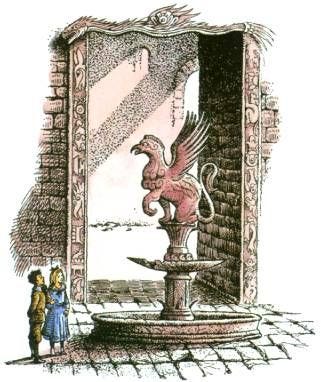
In much of the commentary I’ve read, there seems to be a resistance to anything that opens the aperture on Lewis’s tale or on our understanding of Christianity in general. No, Aslan is Jesus and therefore he must be a lion voiced by a male human. I get it. I do.
Lewis has helped to shape the spiritual bowels of so many of us through his beautiful lion and the world he sang into being so that when we go to the Bible and walk through the world, we recognize God for who he is and ourselves for the small creatures who need him, who must trust him, who ought to be grateful for the deep magic of his providence and love.
Me, too, Anne Kennedy. Me, too.6
But I am also willing to sit and look at Narnia—and, by extension, our world and my faith—through the eyes of another. (Something I wrestle with, in a Narnian context, here.) I might see something new, interesting, and beautiful. As with Scripture, I might see a glimmer of truths that are lost, obscured by my Western eyes and twenty-first century mindset.
My friend Georgia Coley writes:
…we’ve been taught to understand our holy stories [both the Bible and Narnia apparently] not as conversations or mysteries to be understood and unpacked with thoughtful interpretation, but as simple math problems with one clear moral takeaway that can be easily systematized and placed inside a “Bible Answer Book.”
The hosts of the BEMA Discipleship project also say as much, and use a variety of examples in their introductory episode to demonstrate how the Bible “is a very Eastern conversation that we’re eavesdropping on…”
For the Westerner, faith is about creeds, doctrines, and belief statements… we love to proof-text to support our belief… It’s just how we interact with faith. Whereas for the Hebrew, faith is relational. They’re not going to try to define what that looks like because they have experiences with God… You read the story about Abraham sacrificing Isaac, and there’s no addendum at the end of the story where they try to resolve it. They’re just trying to communicate what Abraham experienced on that mountain. They’re not trying to make sense of it. They’re not giving you a blog post with three points that all start with the letter R. They’re just trying to tell the story, because somewhere in that story, Abraham found a part of who God was.7
If religiously-rooted objections to Greta’s Narnia are the hills we’re dying on, I’ll drink from the cup that says, “The earth is the LORD’s, and the fullness thereof, the world and all who dwell therein.”
If the world is the Lord’s—if Narnia and C.S. Lewis and Greta Gerwig and Meryl Streep are the Lord’s—we can find God wherever we are looking for him. But only if we’re looking. If we’ve already trotted out the “Translan” moniker, we’ve put blinders on and closed our imaginative eye to any glimmer of goodness, truth, or beauty that might be present. We refuse to see any part of who God is that may be present in the story that’s unfolding now.
Narnia, awake—and unfold infinitely!
For the Westerner, truth is static and unchanging.
For the Westerner, truth is absolute.
For the Easterner, truth is dynamic.
That does not mean truth is relative—that is a false dilemma.
For the Easterner, truth is unfolding over time.
If I could pull any Narnian parable and apply it to this debate (or to our times generally), it would be the one about the disbelieving dwarves in the imaginary stable “sitting very close together in a little circle facing one another,” refusing to believe that the sun is shining and wine and food are flowing and that the dark night is over and the good guys won.
“Their prison is only in their own minds,” says Aslan. “Yet they are in that prison; and so afraid of being taken in that they cannot be taken out.”
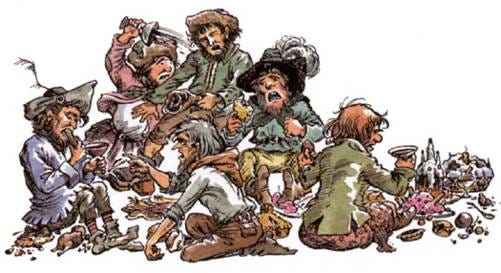
Rampant now is the fear that we, or the world, or our children are going to be taken in by some grand deception orchestrated by Netflix and Greta Gerwig. If there is some grand deception going on, they are doing a grand job at the deception part.
Fundamentally, because we do not see what we want to see, we render ourselves incapable of seeing anything good at all.
None of this is to lift Greta to the status of saint or prophet. She’s merely a single creative among many, grappling with the stories of previous generations through the lens and sensibilities of now. She might, as Georgia says, use her “spiritual imagination”9 to “provoke and surprise” a “complacent audience.” And she definitely lucked out with the dream job of bringing Charn and the Wood Between the Worlds to life.
Obviously, Greta herself is a product of the West. The East-West distinctions raised above are (and ought to be) inherently brought to bear on Biblical interpretation. I bring this conversation to the context of Narnia not to argue that we might be West of C.S. Lewis’ East—although there is something to say for that—but to point out how looking at an established work of art from a different point of view holds value, especially when the thing one is looking at has become simulacrum that threatens to reduce our understanding of the real thing. I am embracing this consideration both as I study Scripture and as I engage with art.
In the Empire piece, Greta references William Blake:
If the doors of perception were cleansed everything would appear to man as it is: infinite. For man has closed himself up, till he sees all things thro’ narrow chinks of his cavern.
“Part of going to Narnia,” Greta says, “is having the doors of perception cleansed—that you see things as they are, which is infinite. It’s only when you can’t see that everything feels disparate and in some sort of linear time.”
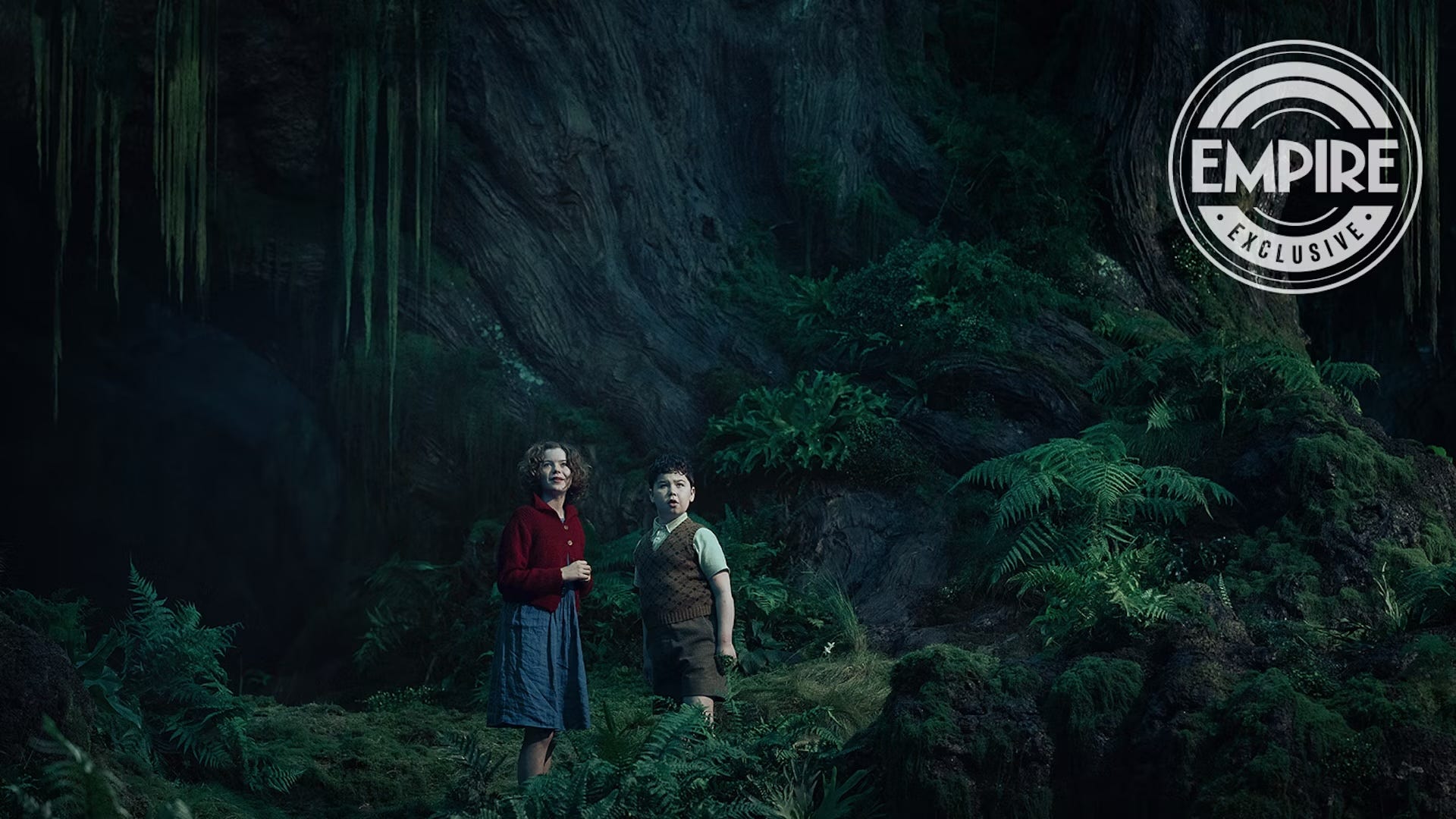
I understand dislike or disdain for creative choices in adaptations. Hardly anyone has been completely happy with a rendition of a book to film. But in the vehemence of the debate around The Magician’s Nephew, I’m reminded of cult obsessions where those who claim the light belongs solely to them are the ones who live in darkness. We’d be better off if we aspired to have more of a sense of wonder, welcome, curiosity, and openness—to live like true Narnians and not those dwarves in the self-imposed stable.
Greta’s Narnia makes us uncomfortable because it doesn’t fit neatly into any of the creedal boxes we’ve pre-set for C.S. Lewis’ work: it doesn’t have a medieval-inspired aesthetic or a classical score or easy-to-grasp Christian imagery (that we know of). It doesn’t have Liam Neeson offering his stentorian voice to bring Aslan to life. (Yes, the Liam Neeson who said Aslan symbolizes “Mohammed, Buddha and all the great spiritual leaders and prophets over the centuries.”)
Would I enjoy a cozy, “traditional” (whatever that means) adaptation of The Magician’s Nephew? Yes, I probably would. But no art is required to feed me the food I’m used to eating. The same way the Bible isn’t required to reaffirm all the notions I’m already comfortable with. I can stay home from the cinemas and re-read Mere Christianity if I just want a reminder of Christian doctrine.
My anticipation is that Greta’s Narnia will communicate some of the many-splendored aspects of Lewis’ writing that get overlooked, miscommunicated, or watered down in the handy Christian iconography that Narnia has become. I expect to find these glimmers of light because I’ll be looking for them, because I’ll hold my impression of Narnia loosely and remain willing to see this world through another lens.
The Magician’s Nephew (both book and film adaptation) is an experience—a story—not mere shorthand for my theology. It deserves the chance to unfold itself.
Anyway, Greta, welcome to Narnia! We promise it’s not always like this.
A few random thoughts related to the Empire piece.
If I loved Greta for nothing else, I love her for building The Eagle & Child (or at least its façade) into one of the sets of The Magician’s Nephew.
Emma Mackey (Jadis) has this to say about Greta…
I think it’s rare, but something that was more cultivated back in the day [was] being curious. Greta has this in buckets, in spades: being intrigued by people, asking questions, reading books, going to find references in the library and pulling all of those threads together.
I love this in a creative person and, if this isn’t a weird thing to say, it’s one of my favorite aspects of myself. I think creative projects and creative people are better when they are informed by aspects of our wide world that might, at first blush, seem wholly unrelated.
Recommended reads on this topic.
Inclusion of items here does not mean wholesale endorsement of the contents or arguments therein…
If you can and if you’re curious, get the November 2026 edition of Empire Magazine! Read the story and look at the pictures. If it’s not on newsstands near you, it’s available on Amazon Kindle.
Why Are Christians So Afraid of Adaptations? by Georgia Coley
Is The Magician’s Nephew Even an Adaptation? by Marian A. Jacobs
Perhaps the most frequent argument I see against Streep voicing Aslan is that it is very important that Aslan be a masculine lion because God is a father—like this unsubtly titled piece, Why Aslan Is Male, and Why God Is a Father by Pierce Taylor Hibbs.
Once again, I get it. I really do. If Aslan were portrayed as a lioness, it would fundamentally change the tenor of the adaptation and make it more of an inspired by retelling with some important parts left out. But I’m not going to the theater needing to be reminded that God is a father or for a good representation of “fatherly tender strength” as James references in his piece linked above. If that’s there, great! But it’s unfair for me to require something of a creative project that I have no hand in making or to get upset if it doesn’t deliver a theme or thread that I’m personally invested in.
Maybe someone should make a list of films that depict that much-needed “fatherly tender strength”—number one on the list might be 2005’s The Lion, the Witch, and the Wardrobe, which is a baller film and one of my favorites.
I appreciate Josh Fink’s consideration that an adaptation that looks at the story through a different (maternal) lens also has value to add to our conversation around Lewis’ work.
More on fantasy and adaptations in general.
Since I end up writing about this stuff so much, I’m adding a tab to VPSS called Adventures in Adaptation. Here’s some of the stuff that will be collected there if you want to keep reading.


I undertake seriously the effort to broaden my intellectual horizons.
Hatred I understand, but wishing ill on another’s creative project is not quite kosher.
In her interview with Rolling Stone, Greta describes the Barbie movie “as humanist above anything else.” The fact that the interviewer had to “gently push back on behalf of the fans” (who would see the movie “as unabashedly feminist”) to prompt Greta to declare her feminist bona fides says more about who she is as a person—and how she sees her work as more than just feminist propaganda—than anything else.
This fear is understandable, especially since Netflix wanted to take this film straight to streaming. If only that annoying feminist hadn’t fought the big corporation to ensure The Magician’s Nephew gets a full theatrical release.
By Aslan here, they mean Jesus.
If anything good comes out of this hubbub, it’s that I’ve discovered Anne Kennedy’s substack. I’ve been a fan since reading her devotional, Nailed It: 365 Readings for Angry or Worn-Out People.
Quotes lightly edited from transcript for clarity.
Quotes lightly edited from transcript for clarity.
And I am not sure why Greta’s imaginative perception of The Magician’s Nephew would be any less creditable than mine. One might not like it, but one must not dismiss it.
I love this quote especially, "For the Westerner, truth is absolute. For the Easterner, truth is dynamic." Amen to that. And I really *want* to agree with you in this because, for most things, I would agree. And I think there will absolutely be aspects of this film that will be filled with truth and new perspective. But the one thing that stops me from being able to agree is that knowing what we do of Gerwig and the creative choices so far, I think deconstruction is going to play a thematic role. I don't dislike a well done deconstruction story (or a well done feminist story either for that matter). But I think trying to blend that with Narnia does miss the heart of the story entirely.
Gosh, Greta citing that William Blake quote took my breath away; good catch on your part. I’m grateful for your prophetic voice, friend! 🤘✨