

Christopher Nolan’s Odyssey is generating a thrilling conversation about myth, meaning, adaptation, and current cultural artifacts. I’ve gotten so invested that I’ve begun retreading Odysseus’ tale, this time via audiobook—Robert Fagles’ translation, read (amazingly) by Ian McKellen. Apparently, which translation one has read—and which translation Nolan is adapting from—is the hottest of topics.
Over on YouTube, Lady of the Library (The Annotated Mind, here on Substack) and Metatron have gone back and forth over what we know about Nolan’s adaptation so far and the cues he may or may not be taking from Emily Wilson’s translation of Homer’s epic. Metatron, judging by his thumbnails, seems to think the upcoming film is the worst thing since Pandora opened her cursed jar, and Cinzia had several notes of criticism from the first trailer—like why don’t these Mediterranean-area seafarers have even the hint of a tan—(in a now unavailable video). Jonathan Pageau also jumped into the fray with a video titled, “What’s at stake with The Odyssey.” The examples are endless.

Clearly, there are Big Feelings surrounding this adaptation.
I’m withholding a lot of judgment personally, because I want to see how it all comes together. Particularly, I’m excited about Ludwig Göransson’s film score, Travis Scott’s role as the blind bard Demodocus, and Nolan’s interpretation of the monsters Odysseus meets on the journey—the Sirens, Scylla, Circe, and Calypso. (We’ve seen a bit of Cyclops and perhaps the Laestrygonians in May’s trailer already. I hope the monsters feel organic to the world Nolan is depicting. The Dune films do a really good job of this—making fantastic elements feel organic. I’ll be comparing the cohesion and aesthetic of Nolan’s Odyssey-world to Denis Villeneuve’s stunning rendition of the Duneiverse.)
Around the time the May trailer released, reports emerged that Lupita Nyong’o had been cast as Helen of Troy. You’ve been on the internet long enough to know exactly what happened: people opened their windows and threw flowers in the street, shouting “Lupita! Lupita!” in adoration.
Of course not. What happened was Elon Musk, lord and savior of Twitter/X, decreed: “Chris Nolan desecrated the Odyssey so that he would be eligible for an Academy Award.”1 After stirring the typical stable of right-wing commentators into claiming that a director who has cast white actors in the leading role of 11 of his 12 films is now practicing racism against white people, Musk attacked those who developed the Academy’s representation and inclusion standards as ‘assholes’ and ‘fucking douchebags’ and kept at it for about a week. (Now you know why the discourse sucks.)
That mini internet culture explosion raised a question I like to think about when it comes to adaptations and generated a theory that might apply to adaptations in general.
First, the question: What is the point of adapting a mythic story like The Odyssey for a modern crowd?
Ordinarily, I’d say we adapt stories like The Odyssey for the same reason we alter the way we tell a personal story depending on our audience. Think of how comedians relate a mundane encounter so that it appears funny to those listening. We want to retell what we’ve experienced (whether in actuality or in fiction) so those who are new to the story can experience and understand it in a way that holds value for them.
This, I think, is the basic, non-controversial impulse of adapting a source text2 into a different medium. Sometimes, the mere presence of a different medium (and an audience that matches that medium) is a call for adaptation. Hence, the newspaper is now a website or a mobile app. The way an audience interacts with the newspaper’s website or app is, of necessity, different from the way it interacts with newsprint.
This transfer of a source text to a different medium is often fraught with resistance. “So often film’s relation to literature has been characterized as a tampering, a deformation, a desecration, an infidelity, a betrayal, a perversion,” literary theorist Linda Hutcheon writes in “On the Art of Adaptation.” Hence the persistence of big (negative) feelings towards even the idea of some books being adapted as films and “the book was better” mantra. (In actuality, the book and the film are different and should be judged on their own merits. Amazon’s Wheel of Time adaptation is bad because it’s a bad TV show3 regardless of how it stands in relation to the source text. Same goes for Rings of Power: there are elements of it that are just plain bad storytelling independently of its relation to Tolkien’s work.)

John Byron Kuhner, an Ohio bookstore owner, thinks post-literacy has led to our current reality where every attempt at a book-to-film adaptation is seen as a tight-rope walk over the lake of fire. This was not always the case. In the old days, “Producers weren’t selling faithful literary adaptations,” Kuhner writes. “They were selling the magic of Hollywood.”
If you loved Shakespeare, you were excited to try Baz Luhrmann’s Romeo + Juliet, with Leonardo DiCaprio and Claire Danes. It was freewheeling but you expected nothing else. If you loved the Iliad, you wanted to go see Troy, even if it was absurd to see Menelaus killed dishonorably by Hector a third of the way in. That was part of the fun: You had no idea what crazy thing the screenwriters would do with the story.
That’s why, as Kuhner points out, no one complained when, among other examples, Denzel Washington played Don Pedro in Much Ado About Nothing (1993) or the titular character in The Tragedy of Macbeth (2021)—a fantastic film—despite Washington being neither Spanish nor Scottish.
Now it seems the knee-jerk, negative reactions to every departure (or perceived departure) from a source text are rooted in (or at least masked by) the desire to deliver a source-accurate product to an audience that may not have encountered the source text partially due to their preference for a medium other than that of the source.
Which makes sense. Critic and video-essayist, Patrick Willems (who introduced me to Hutcheon’s work quoted throughout this piece), says, “The greatest pleasure of adaptations comes simply from recognition—seeing the thing we like given new life on screen.” Ergo, folks want to see The Odyssey of their mind in IMAX.
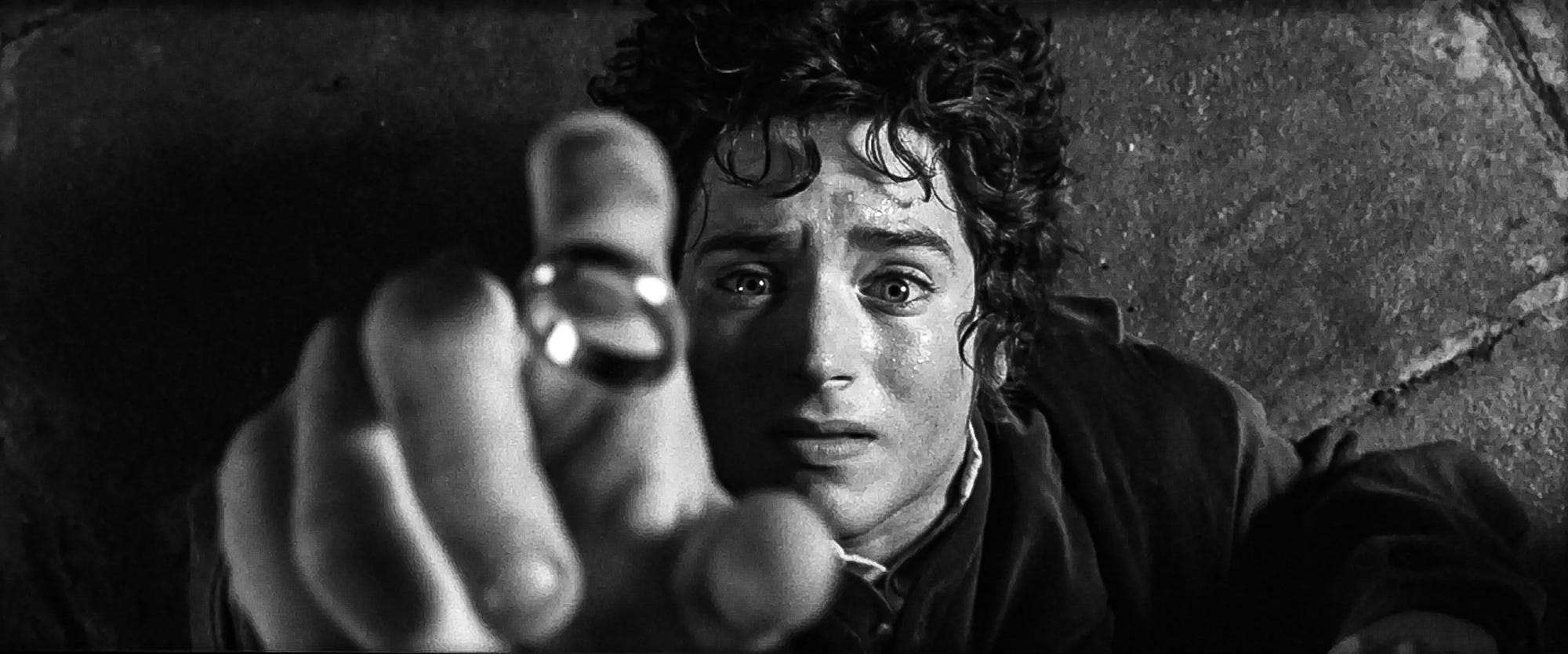
But what about those whose first real encounter with The Odyssey is in IMAX? Kuhner describes selling copies of Lord of the Rings to “huge Tolkien fans” whose only prior experience with Tolkien’s work is Peter Jackson’s movies. The source text is then seen as a nice add-on to their already sacrosanct LOTR experience.
Thus, those who care about accurate adaptations really, seemingly, care about ensuring that those who experience Nolan’s Odyssey get as close as possible to experiencing Homer’s text. It’s both a possessive and educational impulse. I want you to see what I’ve seen the way I’ve seen it. At least, that is the best-case scenario and me giving folks the benefit of the doubt.
Hutcheon continues, “The deeply moralistic rhetoric of such characterizations”—film adaptations of literature as “perversion”—“belies the fact that what is at stake here is really a question of cultural capital.” Who owns the source text? More importantly, whose interpretation of the source text becomes writ large? And is it possible for a sub-sub-creator’s take on a source text to supersede the original?
This is where the present-day conversation about Nolan’s Odyssey finds its teeth. The broadest swathe of criticism emerges from the fact that nary a single Greek or Greek diaspora actor is present in the named cast. (And there is a legitimate conversation to be had about the absence of involvement by anyone with notable Greek heritage as the essay linked in that sentence points out.) But the loudest critics see this Grecian absence as a door thru which to rush to get to the really important thing: that, as Nolan’s Odyssey comes to life, the WestTM is being robbed of a key aspect of its civilizational inheritance and underpinning.
What is Nolan *doing* with a key element of the Western canon? is a legitimate question when we consider that many of those early (now sold-out) pre-release tickets might have been bought by folks who haven’t read Homer’s Odyssey. For them, whatever Nolan puts on screen will be the Odyssey.
But those crying the loudest about it don’t seem to be inspired by intellectual, educational, or literary fidelity. Rather, they appear more infuriated that a Kenyan-Mexican actress is playing the demigod, Helen of Troy. That dismay, often masked by careful measured arguments, has led to silly, desperate remarks like one in Pageau’s video: that because the Hellenes derived their moniker from Helen of Troy, Nolan casting a black woman in this role is him “trying to go to the very core, the very home, the very seed, the very beginning [of Western civilization] and... replace it with something else.” I would have likely taken the nomenclature declaration at face value if it were not so easily debunkable with a Google search. (Multiple viewers and Pageau himself highlighted the error afterwards in the comments.)
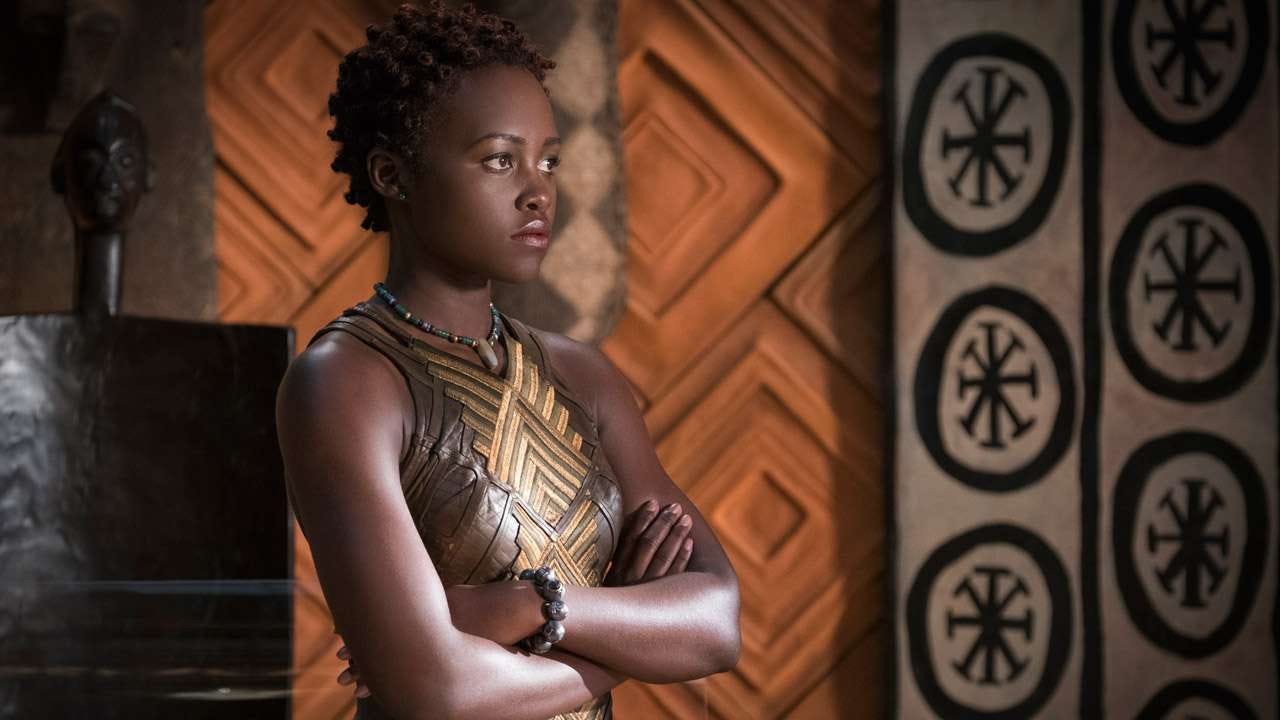
The fact is: we’d have heard nary a peep from these pro-Western Civ furiosas if a white European or American actress were cast as Helen.4
The civilizational “accuracy” dialogue masques the real struggle over cultural capital and ownership of a grand narrative—a source text so embedded in our collective subconscious that we don’t think about it until someone decides to translate it into a different medium. The real suspicion is that someone who doesn’t believe the same way, ideologically, politically, religiously, etc., might improperly handle something we deem near-sacred.
But The Odyssey wasn’t written yesterday. The idea that one group of people can own a story that originated in oral tradition somewhere around the eighth century before Christ, a story that has transcended its originating time and place many times over, is ludicrous.
We don’t own these stories. These stories own us.
I want an accurate adaptation as much as the next guy. But a good adaptation, unique to its medium, should not be sacrificed on the altar of accuracy. The drive to tell and retell, reshape and reframe, adapt for now—with the people and language of now—is critical to the adaptative impulse.
Our favorite stories cannot be so precious that we treat them as though they have no life outside the classroom, the museum, or beyond our private nostalgia.
The why of adaptation is to extend the audience, the conversation, the experience of the source text. And there will be “faithful” adaptations. But the natural shift of mediums opens the aperture of a great work, allowing for new participants, new emphases, and new light to be let inside.
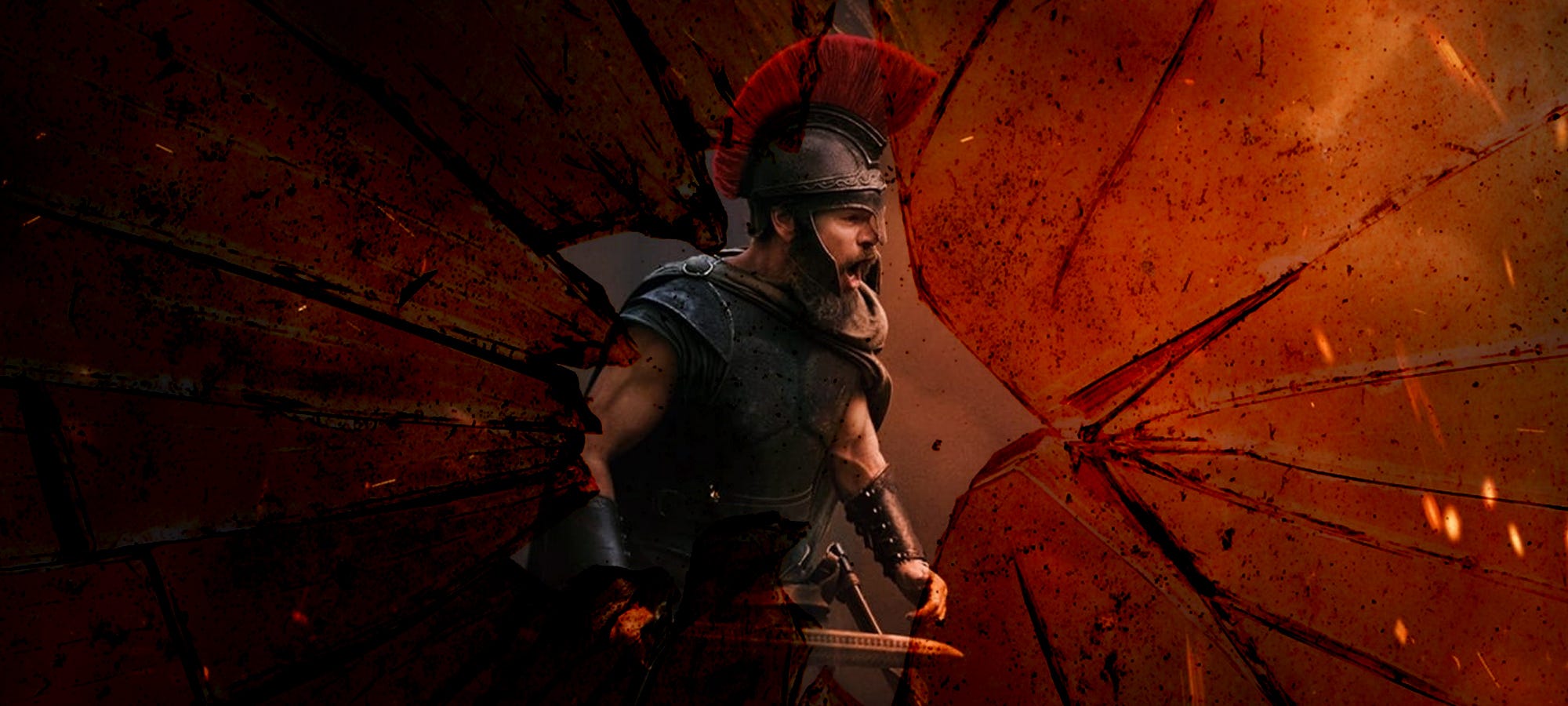
Now, for the theory: an adaptation should function like a broken mirror or the mirrors in a funhouse.
In the shards of a broken mirror, we still see the original, but from a new angle, a narrower, or sometimes broader view. And with different lighting. Sometimes the shard is so small that it serves to focus on a specific element of the source text allowing us to examine it in detail. Often, the mirror is mostly intact but new threads, new cracks run through it, illuminating various intellectual, moral, or spiritual themes.
In a funhouse, the original stretches, compresses, shifts our perspective. We only recognize the adaptation because we know the original. Whatever new elements there are to see, we see them because we or the author of the adaptation is dealing with something familiar.
Adaptations are always, to some extent, in conversation with the original text. The knowing audience can’t help but think about that original text. The adaptation reveals the writer or filmmaker’s feelings about the original text.
To Willems’ thought above, I’ll add that the writer or filmmaker doing the adapting does not cast their spell alone. This sub-sub-creator embodies aspects of the spirit of their time, making their take on the originating work relevant to broader audiences. (What is Homer saying? What is Emily Wilson saying about Homer? What is Nolan saying about Wilson and Homer and us?) That is not a flaw in the system. That is the habit of translation.
Homer (or the class of homers) made choices when putting the oral retellings down to papyrus—which words to use or not use, which specific variation of the tale to record for posterity. Translation into a different medium changed the story in irretrievable ways. In a sense, the original Odyssey is forever lost, and Homer’s work is an adaptation—a product of choice, preference, and translation. Our civilizational ancestors were not blank slates or unprogrammed androids, devoid of bias or process—they were part and parcel of the same bloodthirsty, opinionated, dominating, selectionist impulses that mark today’s creators and adaptors. They were, as we are, editors and critics of their priors.
The adaptation, whether we mean it to be or not, is a refraction of some current perception of both the world and the originating work. (Although not usually adaptations, comic books do this well by constantly depositing their superhero characters into current or near-current times.) Looking at an adaptation is supposed to allow us to see the source text and the society in which it appeared alongside aspects of one’s own society and oneself.
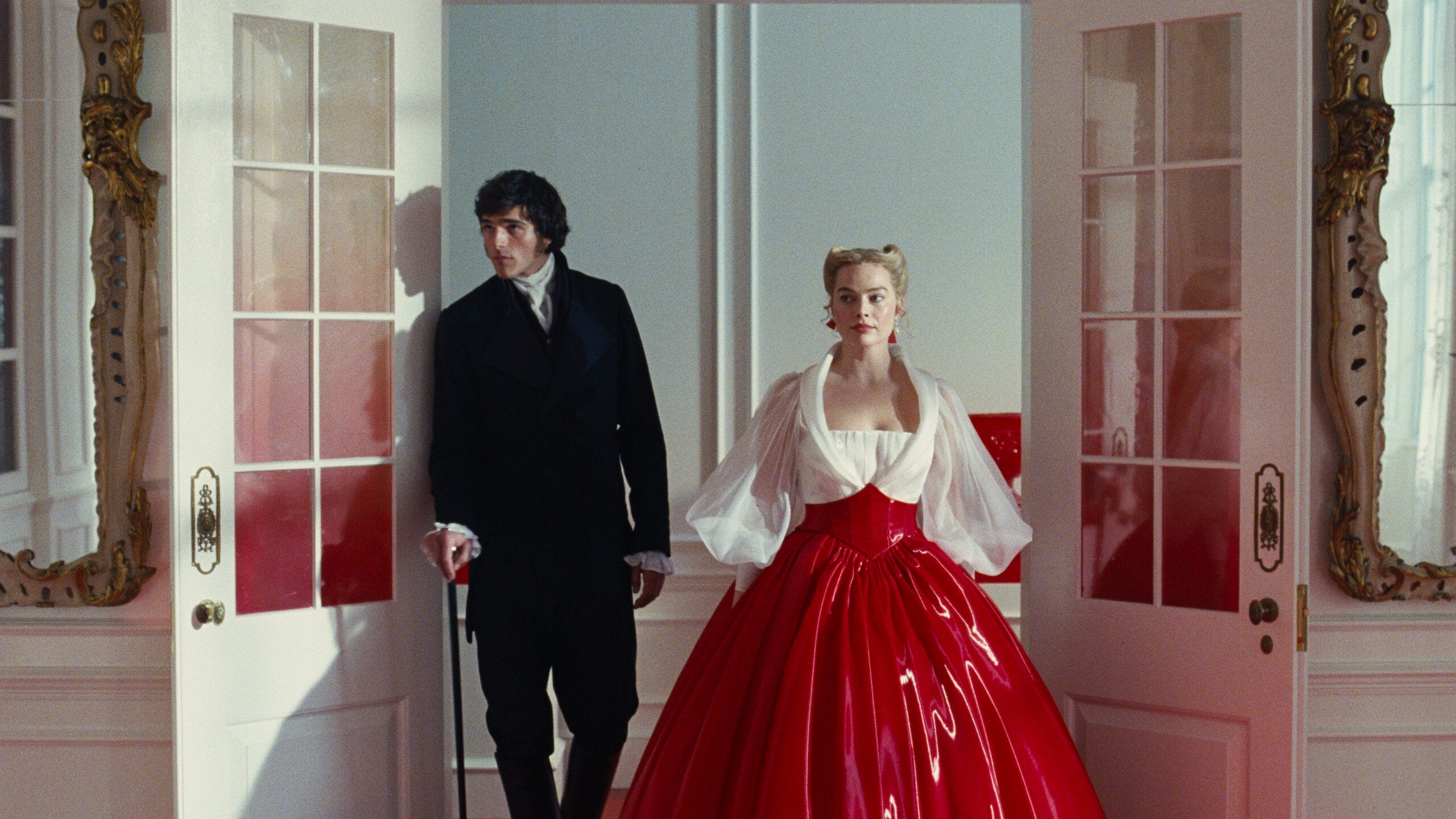
This, according to Cinzia Dubois (Lady of the Library), is the defense for “Wuthering Heights” (2026), which was broadly panned as a bad adaptation and a gross, oversexual veil of the novel. Dubois argues that Emerald Fennell’s film was never meant to be a realistic adaptation of Emily Brontë’s work. Instead, its highly symbolic and visually rich reinterpretation were crafted to provoke the same emotional discomfort and moral unease as the original text. The work is unambiguously layered and, in Dubois’ assessment, preserves the audience’s distaste for Cathy and Heathcliff. “It was far more interesting than a bog-standard tit-for-tat adaptation,” she says.
You can accuse Emerald Fennel of missing the point of the book. I argue that all these critics have missed the point of the film. It wasn’t the book. There’s something way more that’s happening here. A lot of choices were made, and it feels completely intellectually dishonest to reduce it to merely a slutty version of Wuthering Heights. A lot more happened than that and it was not titillating in the slightest and I think that’s the point.
As natural critics, it is easy to grasp the low-hanging fruit of it doesn’t suit my preferences or fall into my long-standing heuristics so therefore it’s bad.
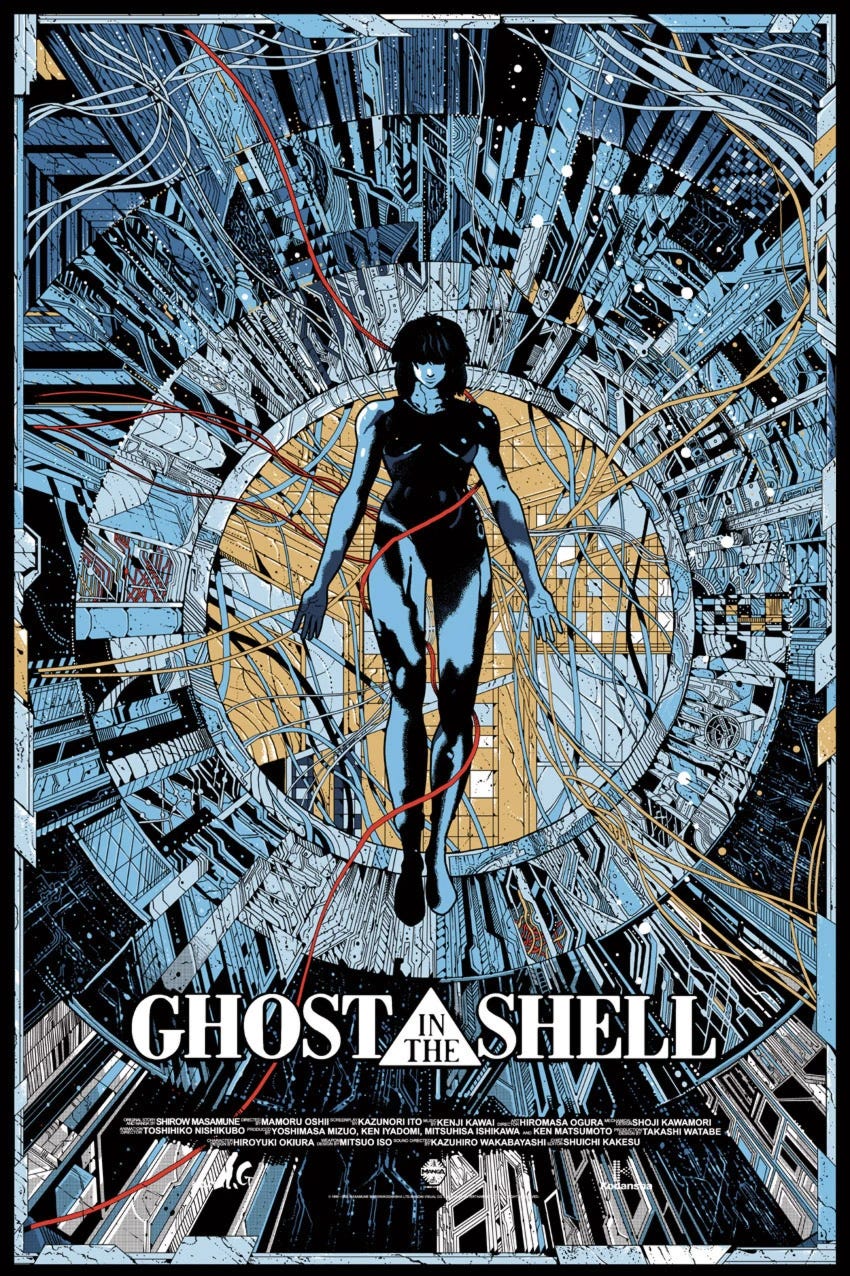
To include another example, when talking about the live-action adaptation of Ghost in the Shell (2017), Mamoru Oshii, director of the 1995 anime on which it is based, said:
If this is to be a remake of the anime, I don’t think it’s necessary to remain faithful to the way things were expressed in the anime. The director should exercise his directorial freedom as much as possible. If he doesn’t do so, there would be no point in remaking it.
(Oshii, who adapted from the 1989/1999 manga, also defended Scarlett Johansson’s casting in the 2017 film against critics who claimed the role of a cyborg with an “entirely assumed” physical form should have been given to an Asian actress. “I can only sense a political motive from the people opposing it,” he said. Again, these conversations have become more about cultural capital than any real sense of loyalty to a text.)
I agree. Like Cinzia, I get excited by how people play with a source text. If I wanted the old story, I’d just go get it. And I still think it’s fun to compare the similarities and differences between mediums. But we must admit any adaptation is a different animal than the source text.5
The truth is: we want our perception of a story reflected to us constantly and comfortably. This is the easy path. Perhaps it’s wiser to not try and make every adaptation our new favorite thing or simply a “parade of iconography,” as Willems terms it, a la Deadpool & Wolverine (2024) or The Super Mario Bros. Movie (2023). The potential of a familiar text rehandled should be valued, not discarded.
The themes of The Odyssey remain relevant and, in Nolan’s adaptation, those themes will achieve not only renewed significance but conversation with an audience privileged to receive the story in a manner not so distant as oral tradition or epic poetry. That is the reason we keep adapting—because the source text remains relevant, not because it needs to be erased.
Since we don’t read things anymore, we don’t know that that’s not actually how Academy Award rules work as Clayton Davis explains here.
I will use “source text” to refer to any original media, whether it’s a book, movie, song, etc. It’s the thing being adapted.
This guy nailed it: “…it comes down to bad execution of basic things that shouldn’t happen in a production of this caliber. The basics of good film-making, of putting together compelling visual images that look good and dynamic, should not be an issue. The entire show, from beginning to end, is horribly edited, looks pretty sterile and actually ends up feeling somewhat small which is definitely not what the Wheel of Time should feel like.” And this guy.
It’s funny how some critics like to argue on behalf of the diversity of white ethnic cultures, but when it comes to Nolan allegedly going “woke” and casting a person of color in a role they see as only for a white person, all white ethnicities are suddenly interchangeable.
These complaints about adaptations feel absent when it comes to musicals. (Perhaps, I am just not into the musical scene.) While no one breaks out singing Alain Boublil and Jean-Marc Natel’s songs in Victor Hugo’s Les Misérables, my anecdotal perspective indicates more people have experienced that story via musical adaptation rather than novel. Maybe this is evidence that an adaptation can supersede the original. And that’s what folks are afraid of.
This is such astute synthesis of the cultural conversation, as always. On a base level, I find myself getting exhausted and annoyed by the latest outrage cycle more and more as I'm getting older; I tend to like lots of movies, and I often enjoy many different adaptations of the same thing, and part of that is that I don't really see any movie or adaptation or sequel as the "end-all-be-all" or anything more than it is. In my eyes, even a terrible adaptation or terrible sequel is completely incapable of "ruining my childhood" or "ruining the series"—I will always be able to treasure and revisit whatever the original work was, and any new media inspired by it can only ever add, never subtract. Of course, I understand the fear with adaptations of extremely iconic stories like The Odyssey (or The Bible, for that matter) that one poorly-adapted take has the danger of being "the one" that sticks in everyone's minds forever. But even then, don't these things ultimately always encourage people to go back and read or watch the original text anyway? I know so many people reading The Odyssey for the first time right now, myself included. Why can't we treat adaptations like this as an open door, an invitation, a celebratory cultural moment to uplift the source material rather than just performing anger and vitriol? This is part of why I've stopped even freaking out about terrible live-action remakes anymore; it seems to me that they pretty much universally inspire people to appreciate and re-appraise the original animated versions, and then they basically disappear from cultural memory unless they were particularly terrible or surprisingly good.
When it comes to the casting of The Odyssey, I guess I've been thinking of it a little bit like Lin Manuel Miranda described Hamilton: "the story of America then as told by America now." Lupita Nyong'o is truly, I think, one of our greatest talents working today, and I have zero issue with her being included. I think there's also another dimension here, which is that Nolan is casting our generational acting archetypes for these mythic roles that would've been the archetypes of their own time. Matt Damon is not who I probably would've chosen for Odysseus on my own, but I can see why he works; there is a fundamental familiarity and trustworthiness that American viewers tend to feel towards him after having watched his work for so long. Tom Holland, likewise, is a good face of the new generation of heroes—and kinda perfect for a character just between that verge of manhood and boyishness. Of course, no one criticizing someone like Lupita's casting really cares all that much about any of that logic; as you pointed out, any white blonde, blue-eyed actress would've been perfectly fine with them. Their arguments about "accuracy" are, to employ a timely image, a Trojan Horse for abject racism.
As you eluded to here, personally I tend to view all adaptations as fundamentally about taking the heart and soul of a given story and reimagining it through the unique language of a completely different storytelling medium. The best book-to-film adaptations are not those that follow the source material exactly to the letter, but that factor the unique strengths of cinema as a medium and communicate the story well using them. In the case of The Odyssey, there are already *so many* completely different cultural assumptions today than existed in the time that story was originally told; Emily Wilson's introduction does a good job of exploring these, particularly those around chivalry and heroism and deception and women and slaves. I think the heart of the story is still highly universal and timeless—but when you think about telling it in a way that the viewers of today will be able to grasp and connect with, certain changes feel necessary to allow the characters to feel sympathetic and comprehensible to them. There's an interesting conversation to be had about adaptations like The Chosen here too, which often have vast historical inaccuracies (the disciples pass out written invitations to the sermon on the mount despite the fact that the audience almost certainly would've been illiterate) but still nail the heart of the story in strong ways. I'm sympathetic to these nuances, and toward the hurdle that any filmmaker faces when adapting ancient literature or scripture. And I think anyone who holds one adaptation as a peak of quality (say, 300 or Troy) is willfully ignoring its own historical inaccuracies because they either don't care or they enjoy the other aspects enough to outweigh it. That seems perfectly fair to me. And I don't think taking out our anger on the artists tasked with making these adaptations does much beyond turn what should be an exciting conversation into yet another divisive culture war skirmish.
This is an interesting take. I think that many people kick back against adaptions not because they're unfaithful or not identical to their imagination, but because everyone has different takes on what's important in a text. For example for some the social setting, history and cultural undertones of wuthering heights is really important to them, whereas to others it's more the love story. Then I think also some feel like there's an undertone from Hollywood that they find frustrating - for example the rehashing/revamping of old stories to make franchises. Essentially stripping a story to make it as palatable to as many people as possible without giving it the love and care people feel strongly they deserve. Especially as Hollywood tends to position itself as ‘canon’. If it were a small invidicual studio I think people would be more flexible.