

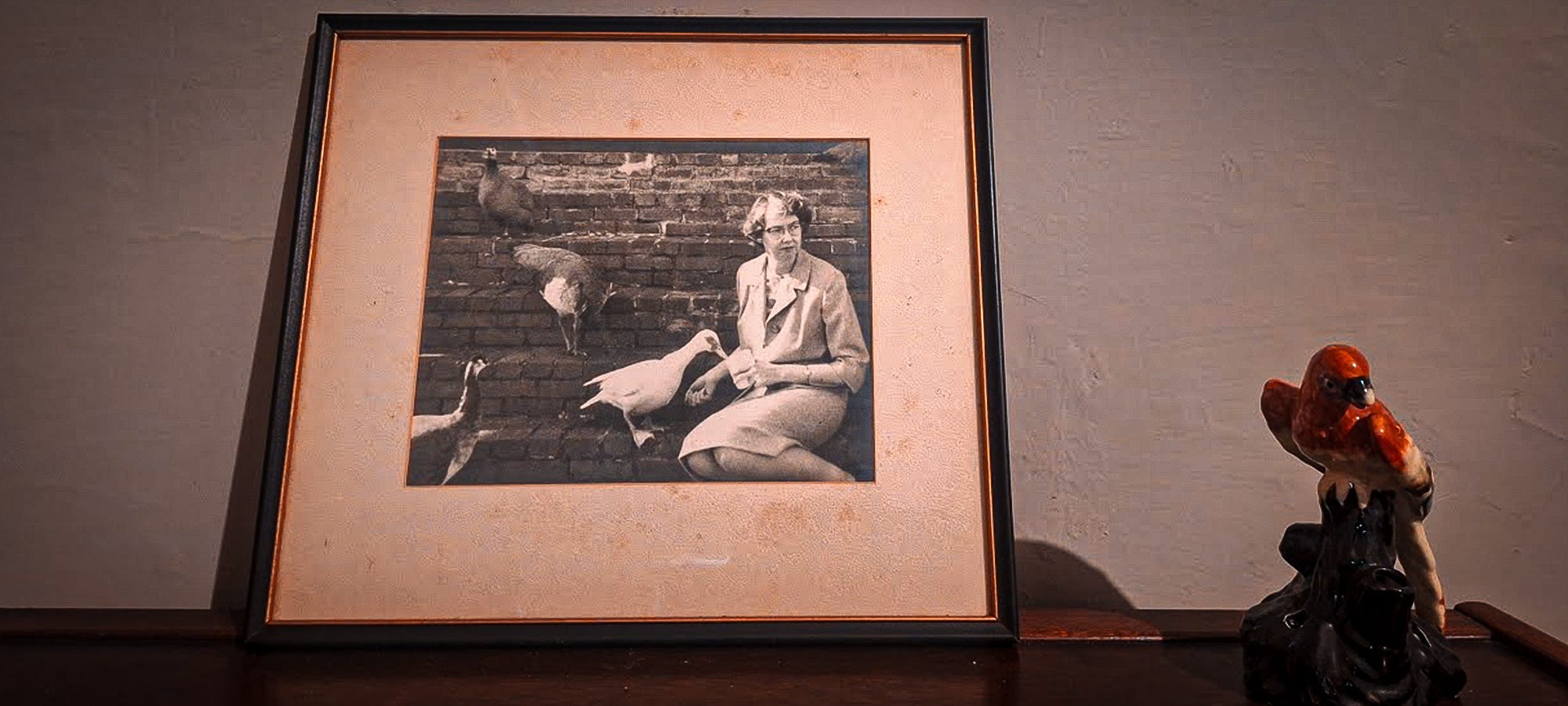
Sometimes, I have occasion to think about things I usually don’t think about—like whether or not Flannery O’Connor was actually racist.
I love Flannery’s stories. I like what I like and, when it comes to art, I usually don’t concern myself with debates beyond what is contained in and stems from the work itself. (There are occasions however...) I refuse to play the game that enjoyment of or participation with a work of art automatically means the embrace of whatever views, opinions, or behaviors the author possesses.
Perhaps I should be more conscious.
Largely thanks to Dr. Mary W. McCampbell’s Christian Imagination course, I’ve explored more seriously O’Connor’s relationship to her African-American contemporary, James Baldwin—as well as what might be required of myself and my contemporaries (that’s you, fellow secret-keeper) in light of similar and dissimilar injustices.
I came across this piece by Carole K. Harris: “James Baldwin, Flannery O’Connor, and the Ethics of Anguish.” It’s a good read and a great discourse of what artists are called to do within their times and from their contexts: witness, depict, interrogate, expose.
O’Connor’s aversion to being “topical”—dealing head-on with cultural, social, or political matters—was downstream of her social position, couched in a milieu that did not organically challenge her, one that would have let her be had she not herself been an agitated soul. Perhaps her perspective would have differed had she not fallen ill or spent so much of her life in Milledgeville, GA.
Baldwin, on the other hand, grew from a desire to not be seen as “merely a Negro writer”1 and began explicitly exploring the afflictions of African-Americans and whites in the South. In his mind, he could not afford to not be topical. Harris writes:
Baldwin and O’Connor were keen observers of the politics and rituals of manners in everyday social encounters, but O’Connor believed that paying close attention to manners was incompatible with writing about the topical, including the directly political; Baldwin, on the other hand, who could not separate the personal from the political, was…fascinated by analyzing what Henry James called Americans’ innocence and sincerity, and critiqued the “innocence” he encountered among white Southerners.
The South’s game of innocence and ignorance is revealed in Baldwin’s interview with the white principal of a Charlotte school being forcibly integrated in 1957 (published in “A Hard Kind of Courage”) and in O’Connor’s fiction—Harris cites “Revelation,” but the same principle is exhibited in Angela Alaimo O'Donnell’s exploration of “The Enduring Chill.” A veil had long been drawn between the white population and the plight of African-Americans in the South. As long as one dared not open the curtain, all was well and good and whites could pretend that they had no real responsibility in institutional racism. It was just the way things were.
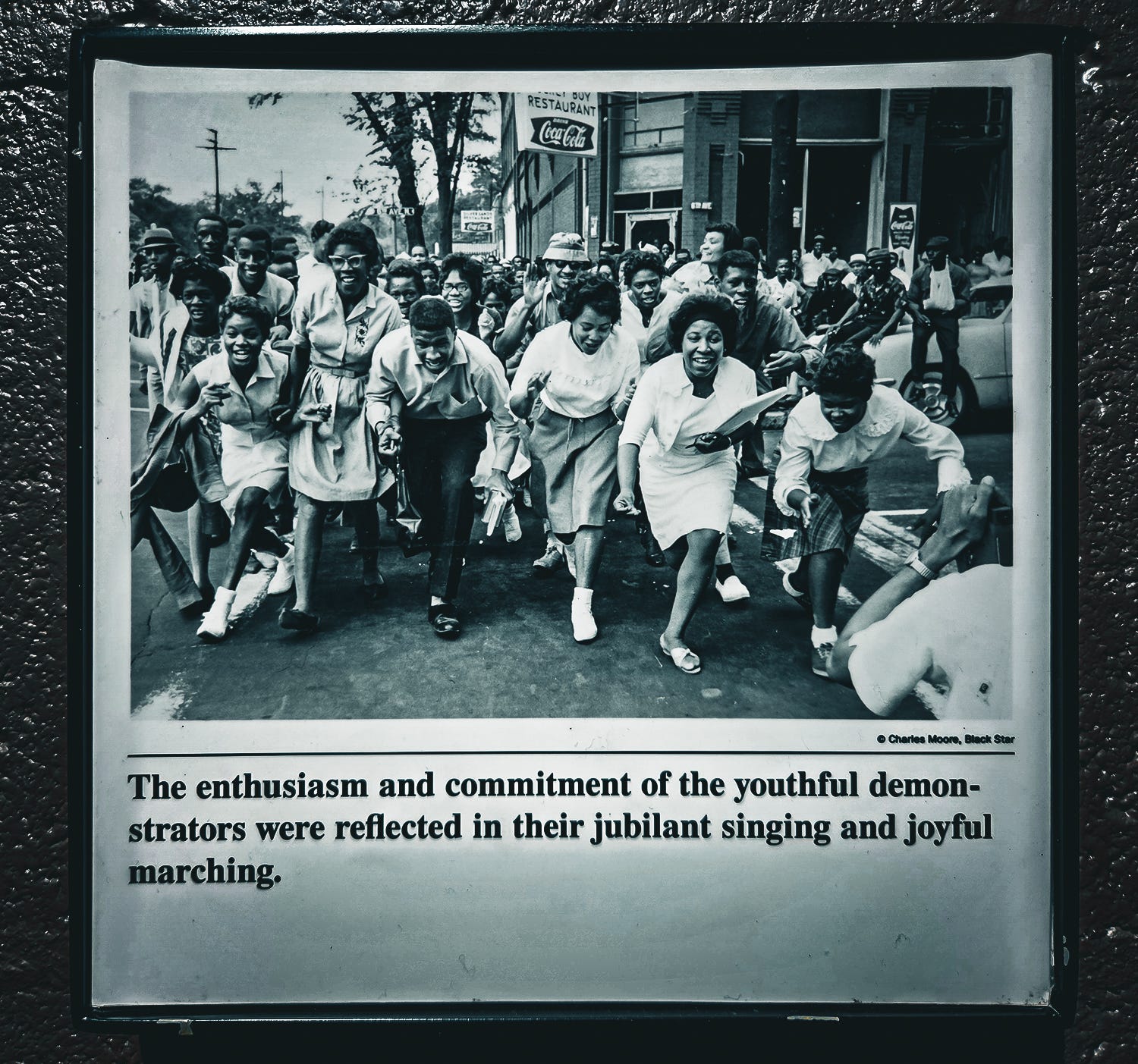
But Baldwin, O’Connor, and the 15-year-old black student being integrated into that all-white school serve to tear the veil and force seemingly irreconcilable entities into the same space where no one can pretend innocence or ignorance any longer.
In 1964, O’Connor infamously complains to a friend: “About the Negroes, the kind I don’t like is the philosophizing, prophesying, pontificating kind, the James Baldwin kind… Baldwin can tell us about what it feels to be a Negro in Harlam [sic] but he tries to tell us everything else too.” It seems she felt Baldwin was infringing on her territory and directly challenging the perceptions and beliefs of southern whites.
O’Connor saw herself as a particular kind of creature who had carved out a specific voice and a specific audience and she assumed Baldwin should have done the same. It seems, she disliked him coloring outside the lines and wanted him to stay in what she perceived to be his lane. But the specific is universal, even when someone else’s specifics makes one uncomfortable. And, in truth, the specifics of black southerners were merely a different denomination in the same currency that affected white southerners.
Regardless, I feel no need to either lambast O’Connor as racist or defend her as a product of her time.
We sometimes play this game with America’s “founding fathers.” They all owned slaves and, whether or not they considered it, they were traitors to the idea that all people were created equal and have “unalienable rights” from their Creator.
But the fact is: we can’t ledger balance. There is no weight, no amount of stories (fiction or non-fiction), and no amount of good theology that outweighs sin against divine image-bearers. We can’t, as they say, make it make sense and put O’Connor, Baldwin, or any of the architects of American freedom into only a single column, good or bad, on the ledger. Perhaps we stop trying.
More on this topic…
James Baldwin, Flannery O’Connor, and the Ethics of Anguish, by Carole K. Harris (Hunger Mountain Review)
The Moment in Race Relations That Keeps Repeating Itself, by Angela Alaimo O'Donnell (Church Life Journal)
How Flannery O’Connor Fought Racism, by Jessica Hooten Wilson (First Things)
Share your thoughts in the comments. Would love to hear thoughtful perspectives.
what else?
»» In How to feel bad and be wrong, Adam Mastroianni helps us ask and answer much better questions by getting comfortable with confusion and becoming brave enough to admit that we don’t know.
»» This was super-interesting if a bit hard to parse… Is American Christianity On The Path To Hinduism?
»» Kristin McTiernan, as usual, is on fire…
Why Do They Always Look Like That? — “I’m hardly the first to observe that how people live shows up in how they look. Writers have been saying this for over a century, and they keep saying it because it keeps being true.”
Die Mad About AI — “The people cheering about AI watermarks and detection tools have apparently never needed to use AI for anything more serious than catching cheaters in their fairy smut writing circles. Their entire frame of reference for AI-related controversy is BookTok drama and self-published romance beef, and they genuinely believe that covers the scope of what these tools are being used for.”
»» I’m still basking in the post-Odyssey glow. There has been so much good commentary that has come about as a result of the film—not to mention boosted interest in Homer’s originals—but I’m highlighting two below.
Ezra Klein on it being ‘the political movie of the decade.’
And this is what I wrote about it, in case you missed it…

»» Imogen Hall’s piece on why it’s okay for one’s “friend group” to not look like Friends was a balm to my soul.
»» Finally, lots of praise for goodness 🍁. Over the past couple months, I’ve really enjoyed her fresh and deeply insightful thoughts on film. She’s written about Supergirl and The Odyssey, but I want to share this post right here…


asides + signal boosts
📖 Reading
I’m still in my Percy Jackson era. Getting back to Sea of Monsters after listening to The Odyssey and watching Nolan’s film is a real trip!
I’ve also begun The Autobiography of G.K. Chesterton, a book I didn’t know existed until about two months ago.
Radio Free Amerika, Vol 1, by Barron Bell: Slowly, I’m trying to make my way into reading more comics and graphic novels and this was a good, quick thing to get under my belt. America is overrun by foreign invasion and a band of reluctant resistors strategize to fight back. Good stuff. Very enjoyable.
🎞️ Watching
Spider-Man: Brand New Day was such a good film! Planning on seeing it again in a few days.
I’ve also been re-watching the Netflix Daredevil series
🎧 Listening
I really enjoyed The Rest is History’s episodes marking America’s 250th anniversary. This balanced (British) take on America’s Revolutionary mythos is quite educational and less propagandy when it comes to Washington, Franklin, Hamilton, and Jefferson. I think I’m going to add this one to my regular rotation.
I don’t know yet if I’d call Charli XCX’s new album, Music, Fashion, Film—my favorite things—extremely good. But what I will say is that it could inspire several essays from yours truly.
“Nothing’s gonna save us not music, fashion, or film” — I hope you’re wrong, Charli.
Such a box would not have afflicted O’Connor, and it is interesting that we still try to stuff artists into boxes of race and gender even now—as if our differences and ability to speak to specific experiences prevent us from participating and speaking to a universal human experience.
thanks so much for the mention!