

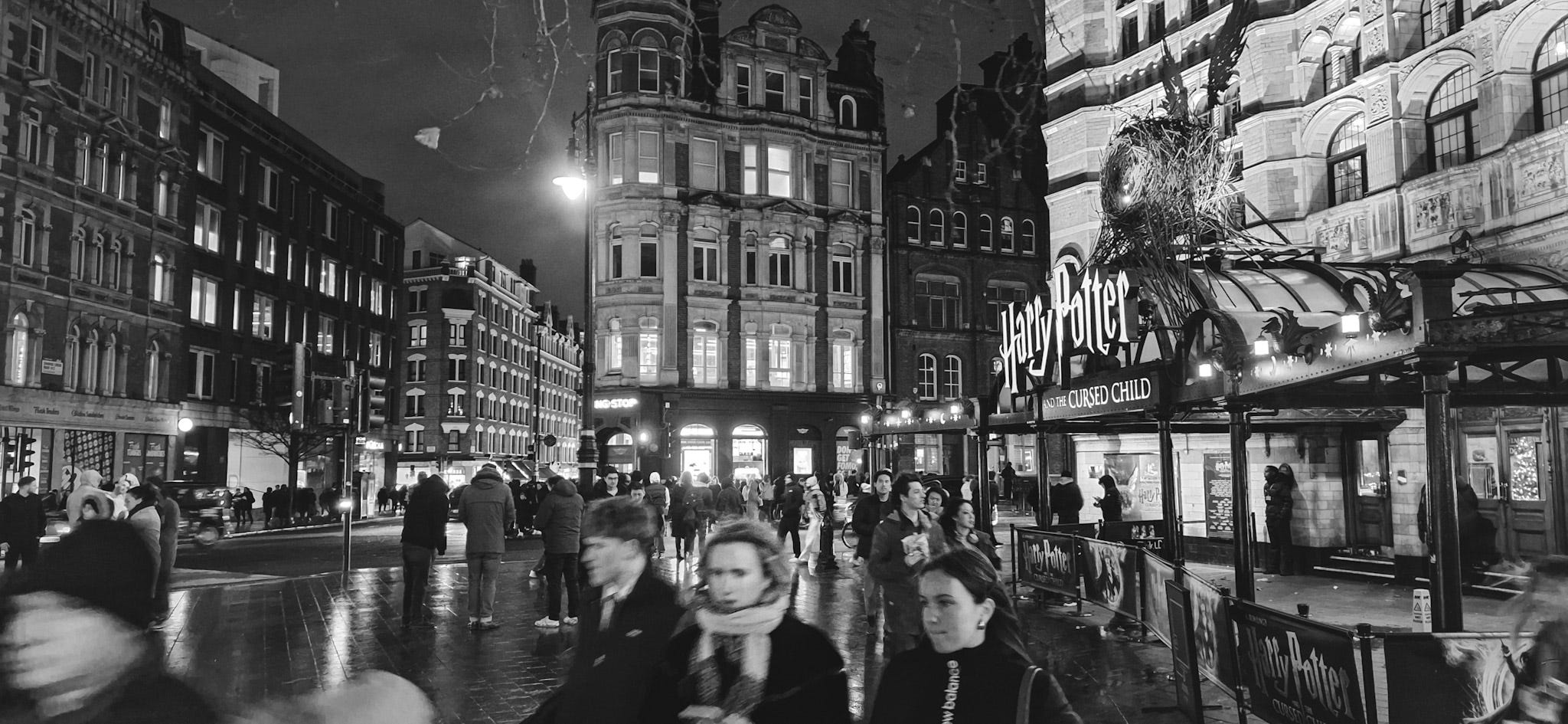
For the longest time, I have struggled to say something about London. Having the desire to say something but not knowing if the essence of that desire could be translated into words.
Flying away from the city for perhaps the sixteenth time, I think I finally have enough language. Mary Oliver helps.
Some are quick to express how much they hate London. It is loud, stuffed, filthy. There is too much traffic. It’s expensive. It’s boring. (I’m personally offended by the last accusation.)
I, on the other hand, cannot help but love the city of cities. Partly because it is loud and stuffed and filthy and expensive. London lives, a heaving, breathing metropolis. An assemblage of arteries pumping blood and thought, time and anxieties, success, poverty, and art through itself. Unremitting. Obnoxious. Unforgiving.
London hoists itself on the unbeguiled, preaching of its own existence. Unfrustrated by its annoyingness. It “turns inwardly to find a space / to stretch out in, within a space no bigger than itself.”1
Lord, direct us.
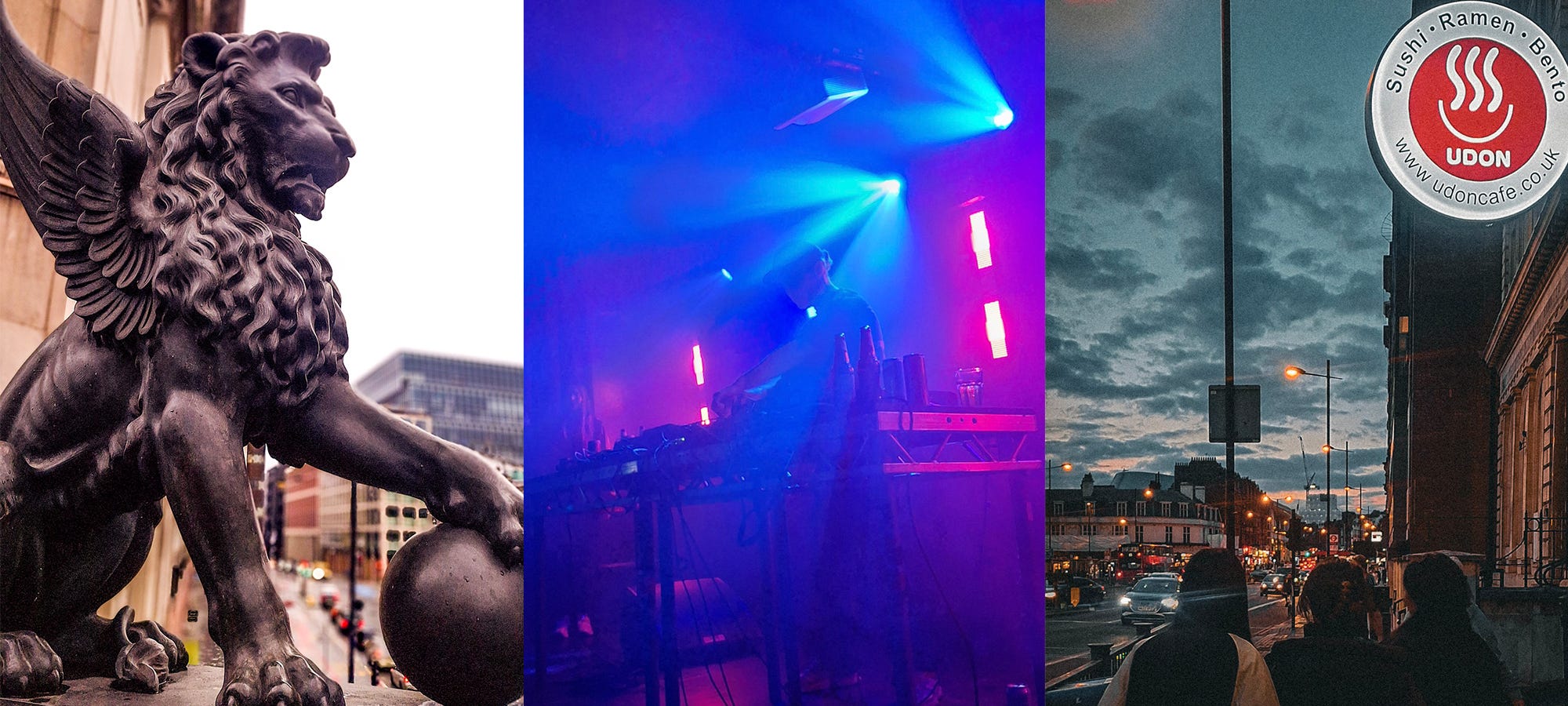
I am partial to the idea that places have souls. A lingering spiritual sense. A vibe, if you will—something that can almost be described accurately with a few choice words. (But only almost.)
I am also partial to the idea of the city in general. I like cities. I like the glut of people and flesh and commerce. I like the overflow of comedy cellars, bars, pubs, churches, theatres, cinemas, and museums. I like the buzz of a million coffee shops and university courtyards and community centers. The sense of making and doing and being in places like this is unparalleled.
I like the sheer magnetism of London. A place one might not like but can’t avoid. I, for one, never want to avoid it.
Lord, direct us.
I even like the wanness of late, late London nights. When all options are exhausted and the city blankets its tiredness around me. Tube workers regard me strangely as I descend below ground. As if I’m the weird one for wanting to go home. It is quarter to eleven.
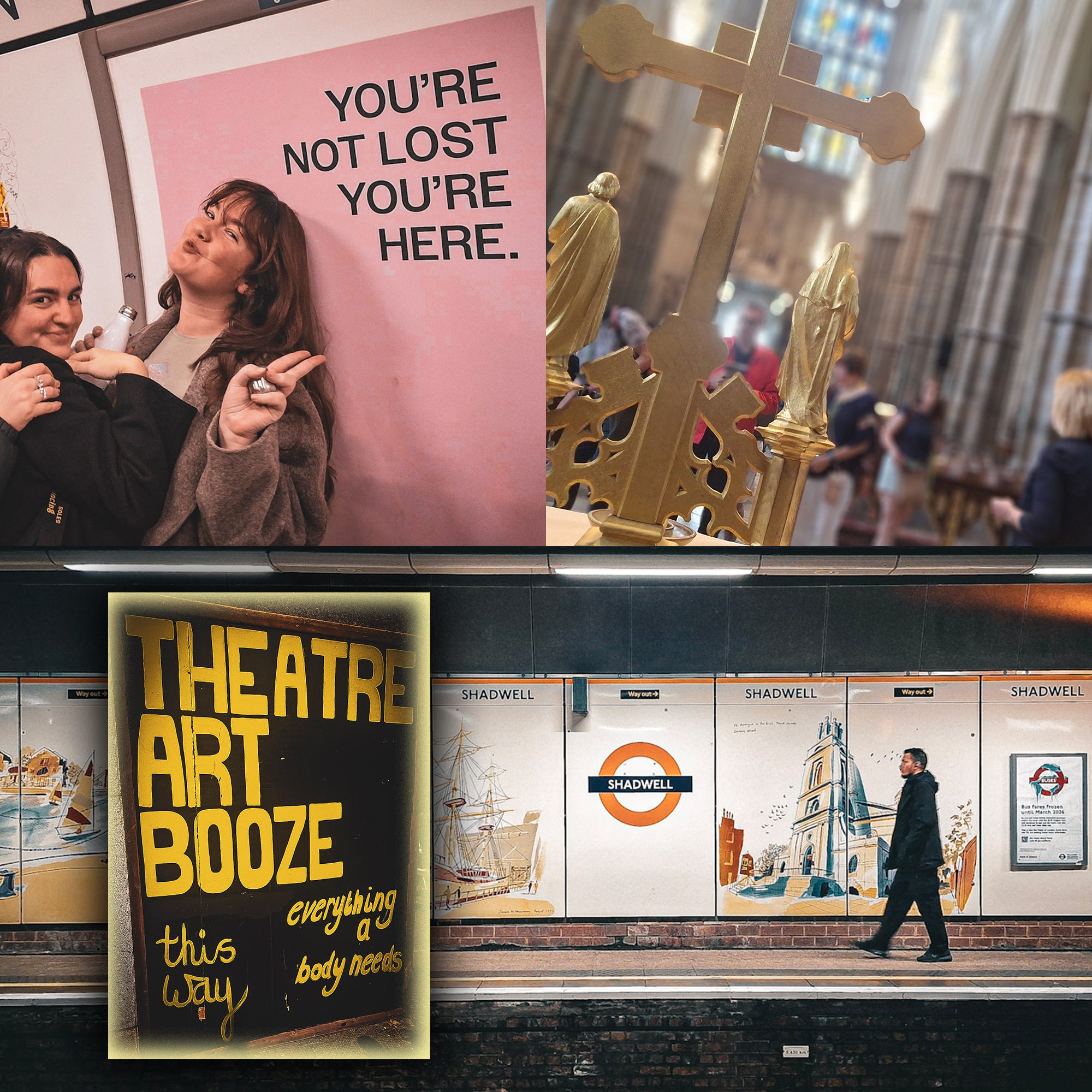
Drunk chaps, the last ones alive among a smattering of passengers killed by exhaustion, regale the near-empty subway car with a recap of the night’s football match, arms around each other’s shoulders, swaying—“by far the greatest team, the world has ever seen!” Young women, unwilling to climb down from the highs of a night out, pop into my picture, momentarily forcing our lines into the same sonnet. We’re not lost. We’re here. Outside the station, an entrepreneur offers me a bit of weed.
Another time, after an exhibit and dinner at Tate Modern, my friend convinces me to take a later train so we can hang out in London longer. But there are no more trains. Workers are on strike. So we end up splitting an expensive Uber back to Cambridge where we parked. This is the cost of London. It takes as much as it gives.
Lord, direct us.
It is easy to be possessed by London, to be manipulated by the city. There is so much to see and do! It has waylaid me and turned me about, with its many secrets, its many opportunities, its many closed and then open doors. It screams the capability to be, in anonymity, both lost and found.
The city is caught in a Jekyll-and-Hydean paradox, a complex it enforces through a love-hate relationship with all who endure there. I’ve made friends fast and entered close conversation. Oddly, I’ve never felt alone even on solo adventures. How can I when spirits incessantly swim up from the ancient stone? There is presence in London. Among its vast grandiosity, I’ve found specifics and homeliness, so many pins on the map—marks left, places to return to.
Lord, direct us.
London is “fettered to a thousand notions of obligation.” It is a city of time reinforced by never-ending cycles, a consistent loop of tube lines, buses, trains. It is fed by and feeds on people who are similarly bound by clocks, regulation, and obligation. “Beyond all other songs,” London loves “the endless springing forward of the clock, those measures strict and vivacious, and full of certainty.”2 Forward, forward, forward says a city overburdened by its imperial past.
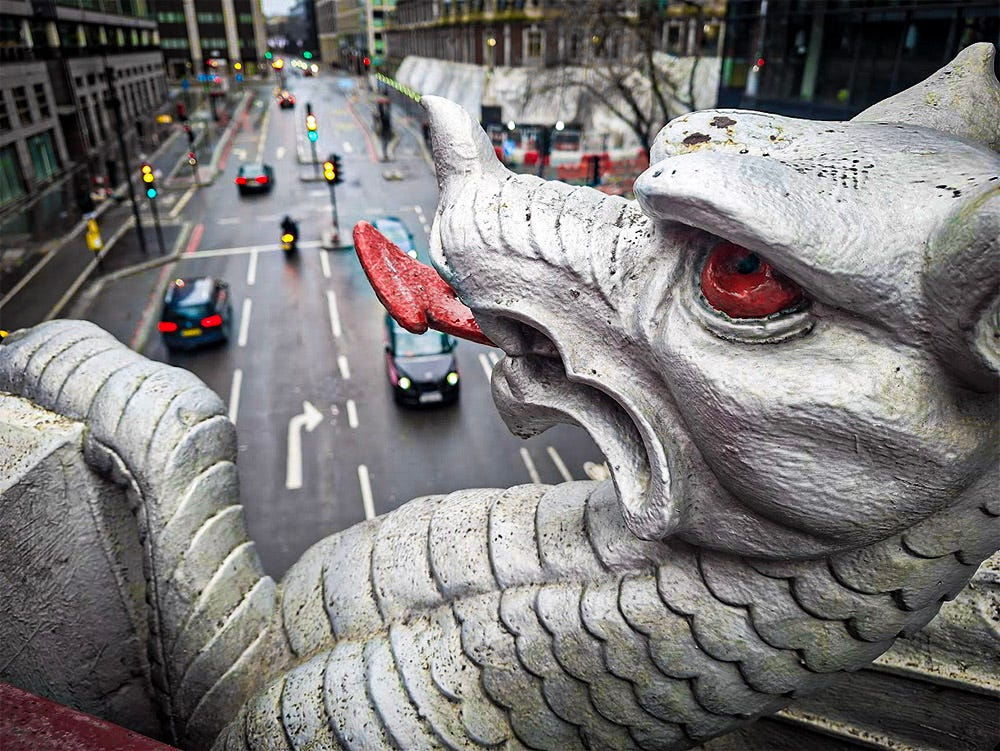
London is the child it was which it isn’t anymore. Every block is rich with history. Some run to it. Some run from it. Everywhere, modernity builds on ancient anxieties. Some come to see the old stones, statues, and landmarks, and are frustrated that their own countries have few equivalents or that so much sheen and commerce has risen up or that so many other people have come to see the same stuff.
Despite its burden, London remains eternally adolescent. It leans into the future, sometimes dragged by change, the ball in a brawly rugby match of diverse and competing sociopolitical contingents. A city of bright lights and youth and innovation. A city of age and decay and decadence. Frustratingly fast. Frustratingly slow. Such is progress.
Domine dirige nos.
“Of Power and Time,” by Mary Oliver, Upstream
As an artist and a bit of a nomad, moving to London felt like finally coming home. It’s not an easy or even comfortable life, but it’s rich and good. I wouldn’t trade it. Thanks for your post!
I think “drunk chaps” is the most British thing I’ve heard you say/type! Absolutely spot on pen portrait there