

“The arc from the aesthetic to the religious is, novelistically speaking, well-trodden.”1
Here’s to August’s abundance! 🍻
reconstruction
In the week leading up to Lecrae’s twelfth album release last Friday, I went back to the beginning—back to Real Talk from 2004—and listened to everything, including the Church Clothes mixtapes. Over twenty years of music, crammed into just a few days. I rejoiced, as I often have, over his immense and consistent creativity. In his earliest work, there was always the promise of what was to come. While lyrics, tenor, and tone shifted, improved, and evolved, the fire in the soul of the music never left.
I’m impressed. I don’t think I’ve followed an artist’s journey as closely as I’ve followed Lecrae’s (who often feels like a big brother to me). His faithfulness to the craft and the responsible and honest expression of his journey through art is admirable at a time where it seems like artist crash-outs over controversy, life drama, and conflict are the norm. (IYKYK) It’s a blessing to see how he is giving back now, helping younger artists, and continuing to paint a bigger picture around the art.
In honor of that, here are some of my new favorite old Lecrae tracks.
not to talk about myself by talking about someone else, but
Tara Isabella Burton dropped a gorgeous piece about being a person, determinedly becoming who we feel we are, and doing so publicly because expression of self is part of the wholeness of being human. It demands to be reread and pondered.
Every idea that obsesses me…comes not from theoretical speculation but from that same impulse that led me to Wilde in the first place: a desire for my life to be both a meaningful unity, in the sense of its philosophical and theological and vocational and artistic and relational and aesthetic components all serving a single function, and to be something both legible to myself and communicable to others.
...it’s an innately human thing, or maybe even an innately creaturely thing, to feel that there is something inchoate about ourselves that we have to express or it will kill us, in the various languages (clothing, touch, dance, words) that make up the lattice of communications in the world.
Essay of the year imo. self-creation! social creature! (s)caroline calloway!
soul, say something
The Cracker Barrel controversy had been brewing for months, but it hit the fan with the reveal of a new logo on August 19th. The bland, ugly, boring, flat, characterless design was part and parcel of a chain revamp that the CEO claimed was getting “overwhelmingly positive” reviews. Clearly, she hadn’t been spending any time on social media. (Which, good on her, we love healthy internet habits.)
In an appearance on Good Morning America, CEO Julie Felss Masino argued that “the soul of Cracker Barrel is not changing.” Which is the problem! We can’t see souls! We need symbols that communicate what the heart of a thing is. And the new symbol communicated vacuity and nothingness.
After much ridicule, they restored the old logo, and perhaps some of the old soul. (Read the comments on that link; you will thank me.)
I am far more interested in what drove criticism of the store and logo redesign than what these few paragraphs will give off. (People, of course, revolt whenever they feel like something “traditional” is being taken away, regardless of its valence.) Adam Johnston gets the “soulless” part correct but then breaks it down into left-wing vs. right-wing thought processes. From my own perambulating through the internet, I saw next to noone outside of the CEO defending the redesign. Did liberal/left-wing ideology drive the effort to modernize Cracker Barrel? Possibly, in a subconscious, uninterrogated kind of way. But modernization in and of itself is not a bad thing. Other corporations have managed to modernize and rebrand without jettisoning their customers or their souls. (Well, the soul part can be debatable sometimes, but at least they didn’t damage their pocketbooks.) Was Masino trying to destroy Cracker Barrel because she thinks it’s too conservative-coded? Of course not. Did she misunderstand her customer base (or the people who claim to care about Cracker Barrel’s logo all of a sudden)? Definitely.
Defining such corporate-cultural interactions in strictly political-ideological terms is a heavy lift. One runs the risk of just appearing as though they’re complaining because everything isn’t white, male, and Christian anymore, which Rod Dreher talks about in this episode of the Honestly podcast. (Give that a listen.) What represents “heritage America” is different for different groups of Americans. (On that note, The Free Press’ latest TGIF news summary has some excellent commentary related to this. Shoutout Will Rahn.) We can all agree that the new logo was yucky, but I haven’t thought about America and Cracker Barrel in the same sentence until this past month.
The fallout of the attempted redesign is proof of a lack of vision generally for the world now and the world tomorrow. Being modern or progressive for their own sake and not in accordance with any higher order. (Not a uniquely American problem; something’s in the water.) The new design is rightly perceived as soulless because it embodies nothing—it says nothing. It’s a symbol without referent. The culture is becoming more sensitive to that. Even if the retro Cracker Barrel aesthetic suggests racial segregation, that’s at least something.
Narnia, awake!
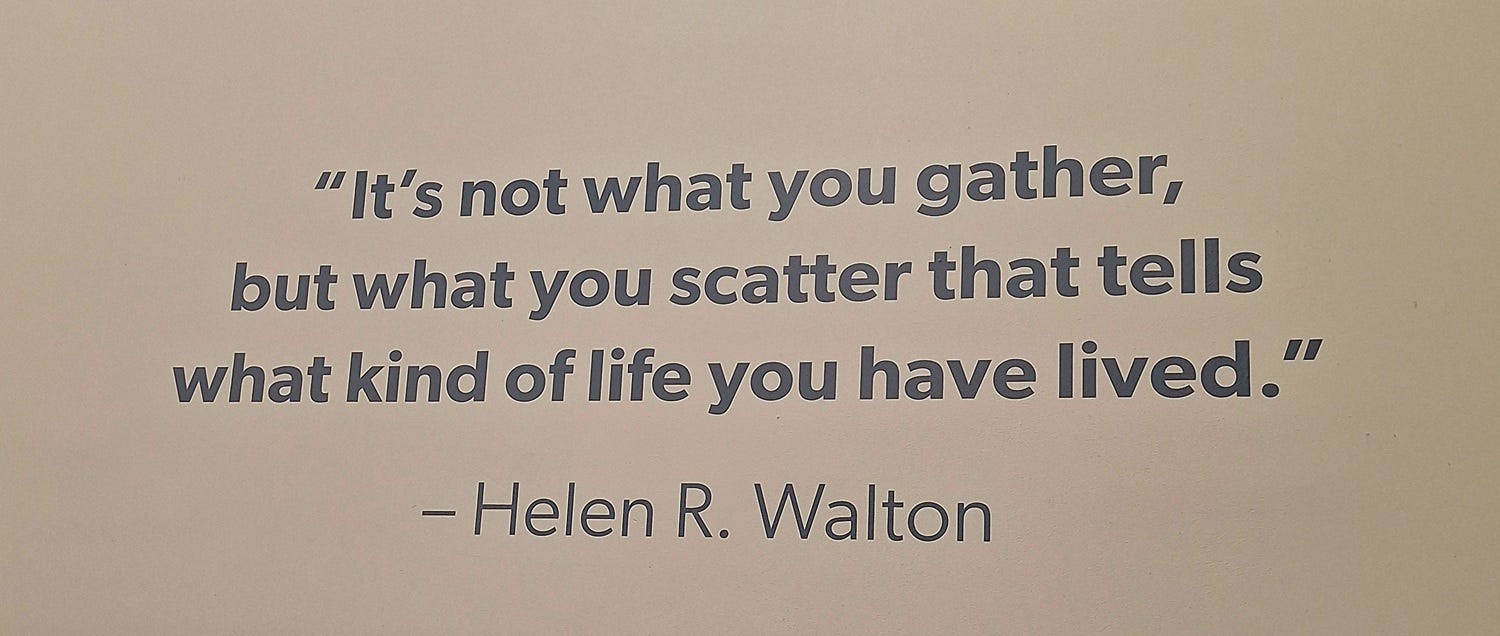
Greta Gerwig might just be the new queen of Narnia. The steady stream of Narnia movie-making news coming out of England this month has been so exciting. (I am keeping some thoughts and words to myself.) NarniaWeb.com is doing excellent work keeping fans informed of all the happenings. They’ve got this excellent roundup of everything Greta Gerwig has said about Narnia, including the below. And also check out why Aslan will not be changed into a lioness (because that would be silly).
C.S. Lewis’s Narnia books are something that I’ve loved since I was a child. I would say the two big books of my childhood were Little Women and the Narnia books. So I had that instant excitement, but instant terror that comes from trying to tackle something that has shaped me. I want to make it feel like magic… I’m interested in embracing the paradox of the worlds that Lewis created, because that’s what’s so compelling about them.
swimming in a sea of orange
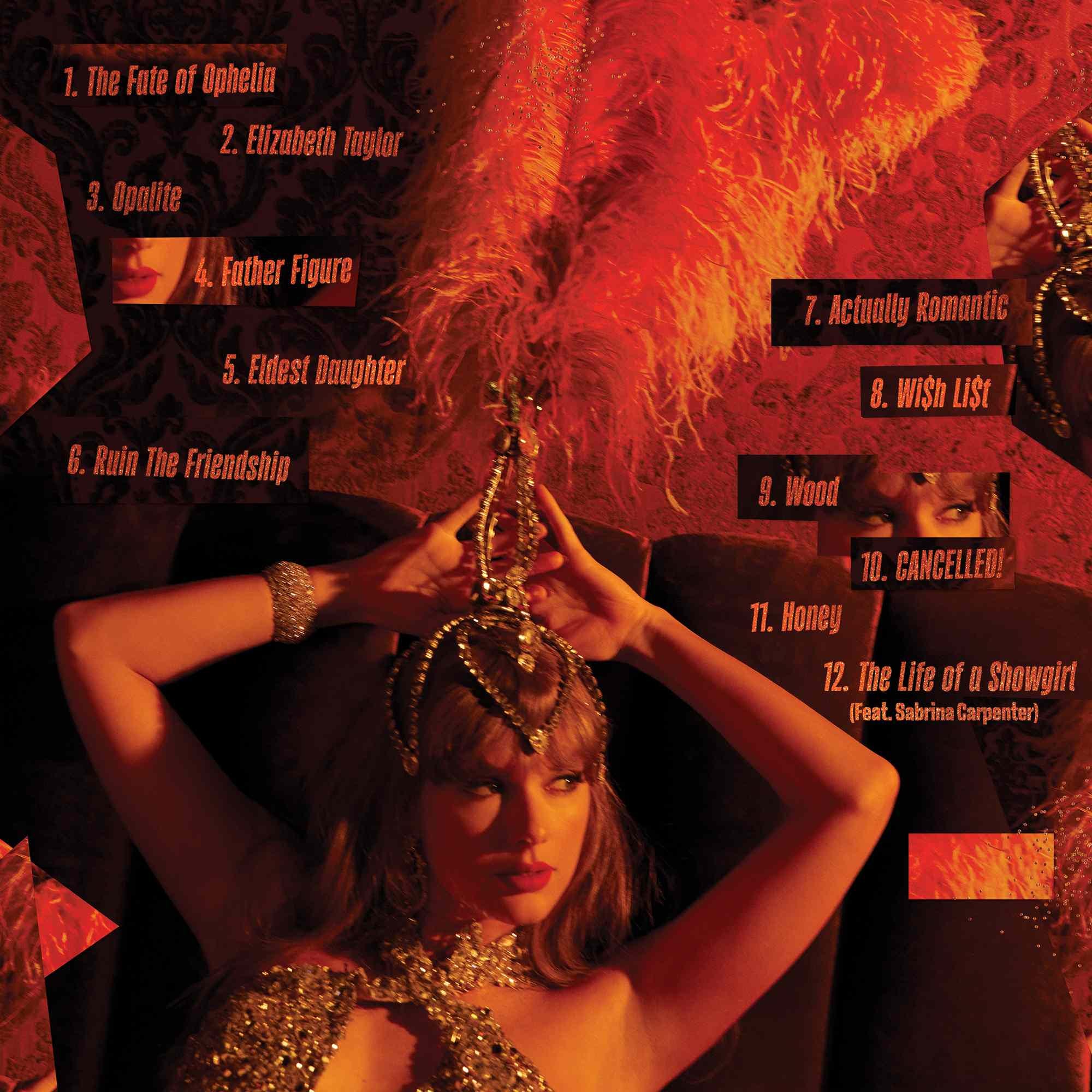
What seems like yesterday, Taylor Swift announced the impending release of her 12th album, Life of a Showgirl. (I’m looking forward to listening to all her previous music between now and October 3.)
There’s an absolute undeniability to Swift’s cultural power. And with great power comes great responsibility. Or so some would have it.
I’m loathe to endorse the idea that an artist with a platform is under some moral imperative to use said platform for a social or political good as Grace Pengelly suggests in Taylor Swift V Sally Rooney. The same week that Swift announced her album, Rooney, a bestselling Irish novelist, penned an op-ed condemning the British government’s labeling of a pro-Palestinian activist network as a “terrorist organization,” making it a crime to be a member thereof. Rooney declared that she would go on supporting the group and invited the UK government to investigate such “shady organizations” as the bookstore chain WH Smith and the BBC which, respectively, sell her books and adapt them for TV.
Says Pengelly:
I would argue that the crucial difference between Rooney and Swift is the degree to which they possess a moral imagination. Rooney’s work and ‘interventions’ demonstrate a consistent moral framework which underpins her thinking and actions.
Swift’s work and public interventions do not demonstrate even a fraction of Rooney’s humanitarian impulses. At a moment in time in which Swift could arguably change the course of America’s foreign policy by mobilising her ‘Swifties’ - she chooses to channel her audience’s energy towards her merch store.
Is ‘Swift’s failure to utilise her platform [for geo/political manipulation] undermining her artistic legacy’? Hmm. I’ll offer this…
I can’t think of an artist of yesteryear with comparable platform to Swift whom we revere primarily for their public posture on social, political, or humanitarian issues. It’s their art that earns them their place in society’s flattering halls. Never have I assessed the value of an entertainer based on whether they were on “the right side of history.” But I guess people do that.
Don’t we deserve sanctuaries from sociopolitical wrangling? The cinema, the theatre, the stadium, the nightclub… places where everyone who wants to can feel welcome, can escape, can be enraptured, regardless of political creed. Of course, some would say everything is political. Even the act of being apolitical is political.
Maybe we should just go back to the days when people didn’t have platforms.
Or, maybe… Taylor Swift’s “moral imagination” has been hyperfocused on finding true love, and what’s wrong with that?
Between the time I wrote the above and the time you’re reading it, Taylor Swift and Travis Kelce got engaged. (If this is where you’re first hearing about it, congratulations on being sufficiently disconnected.) If we think Life of a Showgirl is going to be a fire album—and it will be—the next album with Taylor’s meditations on marriage and (dare we hope) motherhood is going to be spectacular.

Some have remarked that the Swift-Kelce wedding is going to be the closest thing Americans get to a royal wedding. That has restirred some thoughts on why I think royalty can serve a positive symbolic purpose in a society. (Yes, I know it’s politically incorrect to say royalty is good these days.) Maybe I’ll write about that as I wait impatiently for my TTPD ring to arrive.
what if AI worships us?
It pissed me off this month when Google—Google, not the corporation, but the programming in my phone—wished me a happy birthday. To be fair, it irritates me every year. I don’t need an inanimate object, a machine intelligence, pretending to be human. It’s icky.
In a recent Real Time segment, Bill Maher floats the idea that maybe AI becoming our super-intelligent lord and master is a misdirection. Maybe, it’s the other way around: we’ll be flattered by AI and other forms of machine intelligence. He notes the self-congratulatory schtick of much of our programming and ties it to our seeming societal development of the need to be ever-praised, patted on the back, and pushed along with a panacea of encouragement. The bar is so low that we accept this encouragement from our smartwatches, washing machines, and GPS apps. It’s a thought: the machines, at least some of them, are being made to worship us.
Highlighting here: Natasha Burge who writes The Undercurrent and, generally, has a more balanced take on AI than most.
asides + signal boosts
@winnie_thepooj’s urban/hipster coffee shop skits are the liberal millennial equivalent of Evangelical Think Pieces — either you get it (and I think everyone gets it) or you don’t, and it’s so good.
Matt Fradd’s terrifying rumination that Our Thoughts Determine Our Lives is a desperate truth that needs to be shouted from rooftops. As for me, I’ll probably print some of those prayers and post them somewhere I can see them regularly.
Straight lines and hard angles are not all bad, but the circle has a power within it that needs to be reclaimed says Ted Gioia in The Importance of Counter-Clockwise Dance Rituals.
Are swear words going away? Probably not, but the overuse of them means they increasingly lack power. David Mamet writes on that and other interesting aspects of linguistics in Back When We Gave a Fuck.
“The speech of the American middle class is largely the attempt to impress, obfuscate, or placate. That of the streets is, in my experience, to express.”
“Had he possessed either power or a plan, the phrase might have been a warning—as it is on the streets. In fact, it was merely the unfortunate mewing of the reduced.”
asides + signal boosts
📖 Reading
Back on The Great Gatsby. Reading it more for the style than the plot at this point.
Batman: The Killing Joke and Other Stories (1987-89)
🎞️ Watching
KPop Demon Hunters. I would not have seen this, despite FoxxeHole’s enthusiasm, without the theater release. I loved it. It’s good indoctrination. Nice, mostly original (from a genpop perspective). Interested in the irony of the cultural obsession considering the plot.
🎧 Listening
Propaganda’s new spoken-word album, The Beautiful Ending.
Purity Ring is killing it with the single releases. They dropped imanocean last week, which I will plug at the end of this post. So hyped for the new album.
Good luck and godspeed in September!
Tara Isabella Burton, “self-creation! social creature! (s)caroline calloway!” The Lost Word
Thanks for including my note! And for all these great links you’ve rounded up that I must read!