

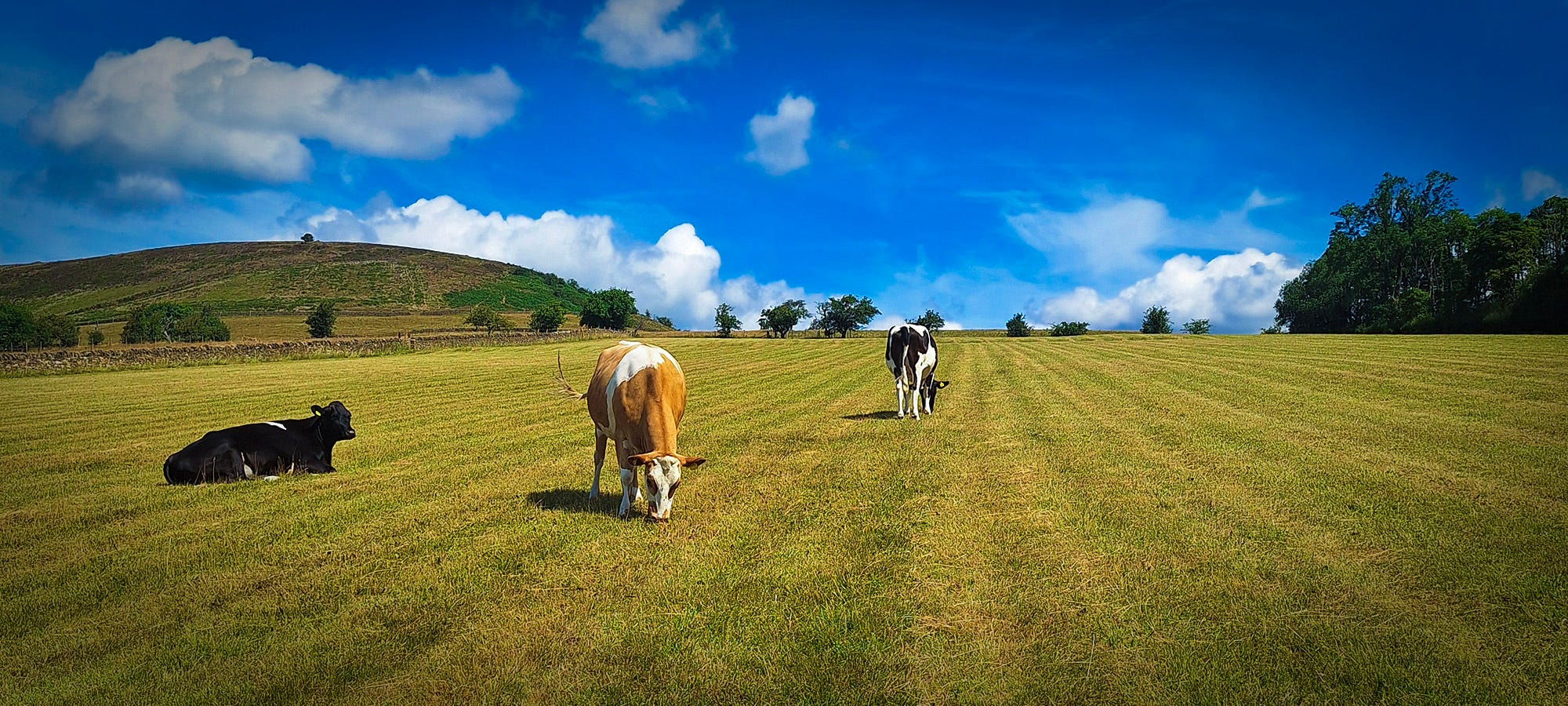
Okay, I’m being dramatic; I’m not enduring withdrawal. But Hutchmoot UK 2025 was incredible on a few accounts…
Foremost, I only bought one book! (I’m learning self-control.) It was Upstream: Selected Essays, by Mary Oliver, which I’ve already finished and plan to read again. By contrast, there are at least two books I bought at Hutchmoot UK 2023 which I still haven’t read.
Second, it was great meeting old friends and making some new ones and getting to introduce my wife to folks I love and have learned from. The conversation and buzzing creativity were both balm and inspiration.
Third, I had the privilege of delivering a talk about tattoos and body art which led to some excellent discussion on morality, art, community and how the way we present ourselves affects (infects?) our society. There was also something about capital-b Beauty vs. lower-case beauty and capital-T truth vs. lower-case truth that I think deserves further exploration in the how do we interpret art space. I’ll see about getting an essay version of the talk online soon.
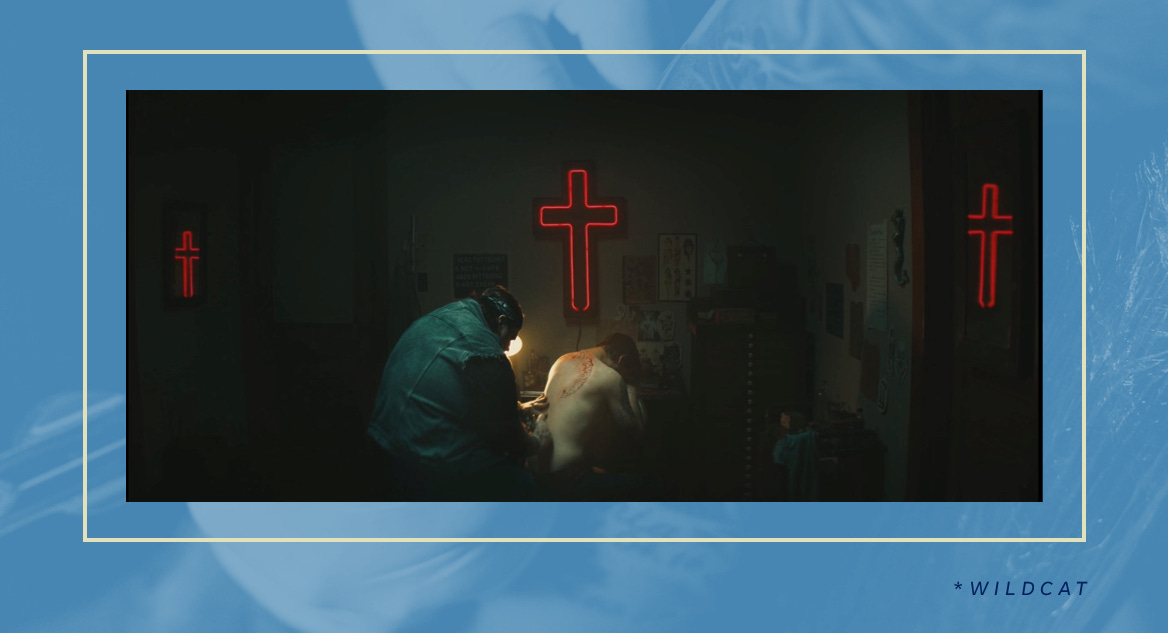
For now, here are some other highlights.1
“A little bit of provocation and ambiguity goes a long way.”
I could not miss a talk titled Andrew Niccol: The Cinematic Genius You've Never Heard Of—partly because I love cinematic geniuses and partly because Mark Meynell is the type of guy who raises the level of chumminess in a room just by his presence. But, also, I hadn’t heard of Andrew Niccol, the screenwriter and director behind Gattaca, The Truman Show, Simone, and other masterpieces. Mark excellently explaining just why Niccol’s work is prescient for our time and why work like his will become even more necessary as we face a potential takeover by artificial intelligence, outsize automation, and hold at risk the value of in-person human relations. Rooted in Niccol’s work is the advice that going to the logical conclusion of a dilemma, being provocative and ambiguous, and developing our morals and ethics from there is a better way to figure out what we should do while bringing people along with us.
“The blessing of being dependent.”
This observation might be skewed by the sessions I chose to attend, but there seemed to be a heavy focus on spiritual and emotional well-being this year. Matt Searles was an MVP in this area, bringing two sessions, one on the limited nature of being and the other on mindfulness.
In Gloriously Finite, he spoke of the blessing of living a limited life. “Saying no to some things gives meaning to the things we say yes to.” And I agree. We live in a world that fears missing out when, if we fully embraced what we have, we’d find more joy in the present. We must receive what is as a gift. This is something I’ve been learning over the past few years—not holding on, not rushing forward, walking through open doors and abiding in the present place.
In Mindfulness Insights, he also spoke of a “slowed down Christianity.” Not one obsessed with checking the boxes of devotion but acknowledging that God feeds us through beauty, conversation, weather, nature, and all manner of positive things. I walked away with a handful of practical ideas to attempt in my own life.
“Myths think in men unbeknownst to them.”
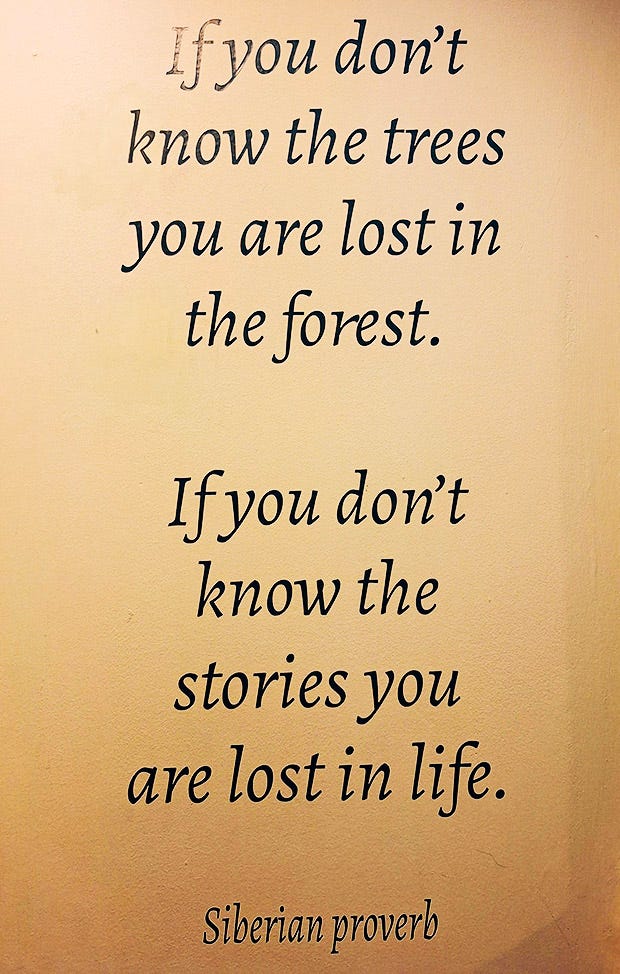
Tamar Karni’s talk, Trees of the Hebrew Bible: Words + Worlds, did more to cement a definition of myths and define their importance to a society than anything I’ve read or heard in recent memory. “Myths communicate a people's perception of themselves and their relation to the world.” She demonstrated this by examining two passages in the Hebrew Bible, explaining how the image/symbol/idea of specific trees bore meaning for a particular people. If the mythic mind thinks in concepts expressed through images, I’m wondering now which specific images carry significant meaning today. We live in a world of memes. Is a meme the proof-of-concept for those who doubt the significance of myth?
Read more on myths, trees, and stories in Tamar’s series on human-arboreal relations at her substack, In My Garden Grew…
sins
This is not a recap of a particular session, but some striking observation. In his session Invisible String, Nate Morgan Locke pointed out that the first act of Adamic creativity—the making of clothes from leaves—was an act of deception. With so much of the conversation around art and creativity being about expressing self, it made me wonder whether more of it should be about what we might be concealing with creativity.
This sentiment was echoed the next day during Marlita Hill’s session when someone pointed out that “our besetting sins are so often tied to our creativity” (he was quoting from something he’d read). Folks in visual and performance arts apparently struggle with hot-blooded sins and miscreances of passion, while those inclined to more cerebral arts like writing and teaching struggle with intellectual crimes like pride, dishonesty, and judgmentalism. I don’t know how true all that is—someone should do a survey—but it did get me thinking.
“The story is older and wiser than we are. The story knows more than we do.”
(said Malcolm Guite)
All right, that’s enough Hutchmoot for now. Here’s other stuff that grabbed my attention this month.
Jaclyn’s essay, The Displaced Pilgrim: Yearning for Home (The Rabbit Room). The whole challenge of loving a place while constantly wondering about the breadth of your belonging is beautifully described.
Scaachi Koul’s somewhat bizarre (in a good way) piece, It’s Time to Log Off. She encapsulates both the struggle against being so online and the shrug-and-deal-with-it mentality.
Madeleine Kearns’ report on How Catholicism Got Cool. (The Free Press)
Kylee has excellent, practical, doable suggestions for unrotting your brain. (Seriously, check this out.)
In The Visibility Ick, Grace Pengelly gets after the tension between the desire to appear effortless in public and our fear of being observed trying.
Katelyn Beaty’s When Deconstruction Becomes a Brand… because it needs to be said again. (The Beaty Beat)
Sophie Killingley has a lot going on these days, so she started a substack to give herself more to do, and I really identified with her first post: I stopped using words to pray.
asides + signal boosts
📖 Reading
Upstream: Selected Essay, by Mary Oliver. (This book is amazing and beautiful and pretty. Read it. You’re missing a gold mine.)
Batman. Feeling inspired by the aforementioned Kylee’s post and the serendipitous discovery of a comic book store, I bought a collection of a type of literature I haven’t read in a long, long time. Time to awaken some neurons and wire my brain in a new way.
🎞️ Watching
James Gunn’s Superman. I thoroughly enjoyed this movie and, fortunately for the discourse, I’m going to write a little something about it soon now that the dust has settled.
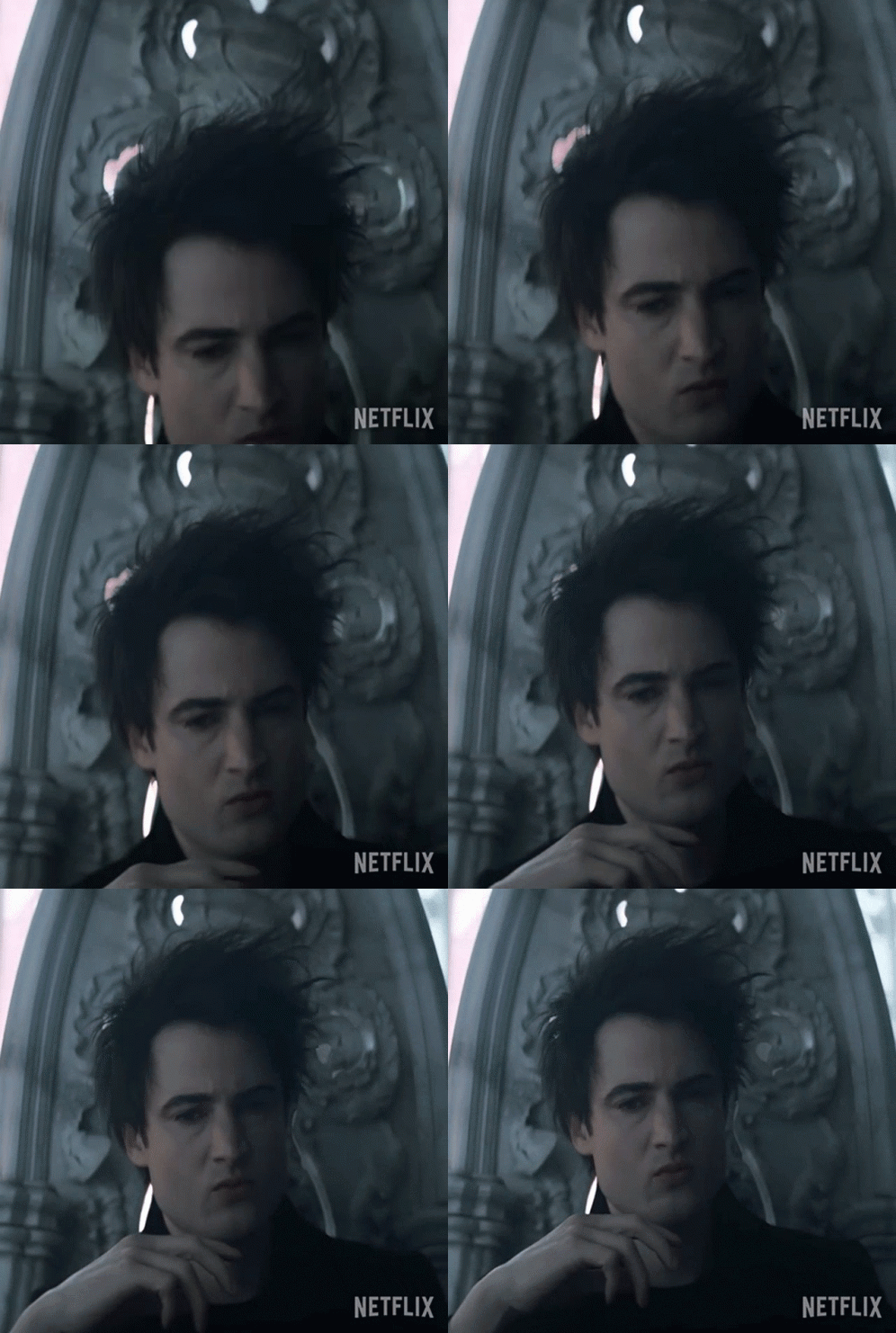
Sandman Season 2. As if my brain needed an even bigger sandbox in which to consider myths and symbology.
🎧 Listening
Finally started listening to the Triptych Conversations podcast with Mark Meynell, Joel Bain, and Sophie Killingley. Three friends talking about three unrelated artistic masterpieces. What’s not to like?
Purity Ring has a new album coming out this year! Lecrae has a new album coming this year! CHVRCHES is working on a new album! (Releasing next year?) I’m so excited.
Speaking of music, I listened to the Culture Study podcast episode, Unlocking the Allure of Tate McRae. (“She’s serving.” “Serving what?” “She’s just serving.” 😂) If you like exploring the current culture, they have some really interesting conversations, including this one: Why Are Men’s Clothes All Earth Tones?
Clipse’s new collaboration album, Let God Sort Em Out.
Okay, goodnight and godspeed. Live limitedly!
Quotes are from my notes. They are as exact as my memory and writing speed allow them to be.
This was so different from my normal reads and for that reason really engaged me. Thanks so much for mentioning my piece and I can’t wait to read some of the others you also mentioned!