

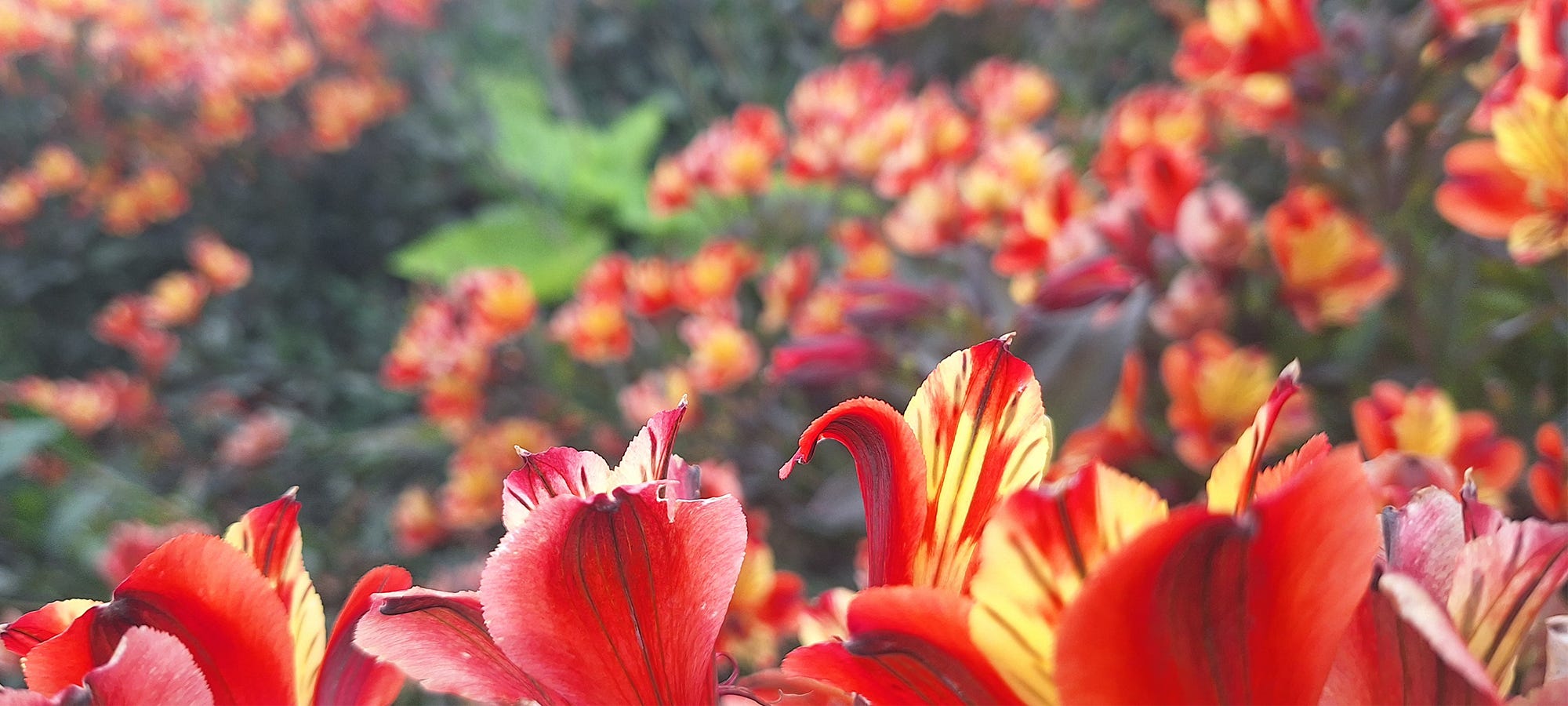
A few months ago, I was reading some of the powerful monologues in the book of Job—specifically Elihu’s and God’s. Together, they ask some of the most evergreen rhetorical questions in Scripture.
“Where were you when I laid the foundation of the earth?”
“Can you draw out Leviathan with a fishhook or press down his tongue with a cord?”
“Can anyone understand the spreading of the clouds, the thunderings of [God’s] pavilion?”
These questions are designed to provoke wonder and awe. To force Job into silence, into awareness of his own smallness.
Then I began to consider: if such questions were originally posed in our vernacular, would they evoke in post-enlightened, twenty-first century people the same humility they evoked in Job? Would such questions force us into silence and wonder? Or would they inspire incessant rounds of well, actually answers?
Think about it…
If the mythic Leviathan is accurately reinterpreted to be some creature belonging to the order Crocodilia, mankind has certainly forced open the “doors of his face” (31:14) and ‘stripped off his outer garment’ (31:13).
“Do you know when the mountain goats give birth?” the Lord asks. “Do you observe the calving of the does?” (39:1). Why, yes. Someone has figured that out. I could google it if I cared to know.
“Do you know the balancings of the clouds… you whose garments are hot when the earth is still because of the south wind?” (37:16-17) Sure, someone somewhere can explain nephology and how tropical air masses originate and move around the globe.
“Teach us what we shall say to [God],” Elihu tells Job. “We cannot draw up our case because of darkness.” Well, actually, Elihu, we have this thing called electricity now, so I could just turn the lights on.
See what I mean? For Job, these were humbling and terrifying concepts. For us, many of these questions would elicit a shrug at worst and, at best, an inclination to find the answer.
Reading Job makes me consider whether part of the reason for the dearth of natural wonder in our society is because our threshold for wonder is pretty high. We know too much about how the world works so our horizon of wonder is much further out than, say, Job’s or that of someone who lived prior to the twentieth century.
I often think of wonder as a deliberate absence of the need to know—being content with, for lack of a better term, ignorance. Being satisfied to sit in the “negative capability” that Keats spoke of: that ability to exist comfortably within “uncertainties, mysteries, [and] doubts, without any irritable reaching after fact and reason.”
We don’t have to know everything. And I think our deprived sense of wonder could be renewed if we were more deliberate about preserving our ignorance.
Matt Searles brought this up in two of his talks at Hutchmoot UK last week: with our phones and the internet, we’ve achieved a feeble human attempt at godlike omniscience. We have the capability to know everything we would ever want to know. We stand atop a cliff and stare down into the chasm of would-be wonder, the breadth of human knowledge laid out before us, mystery brushed away by coherence.
Technological capability (not to mention the pace of modern life) often distracts us from the potential for wonder where it still exists—sunrises, sunsets, waves frisking on a shoreline, plants springing enduringly from the earth. These are things I know I could understand if I wanted to. I could grasp them in five minutes. But the more information we know about a thing, the less we understand the thing itself, its fullness, its interconnectedness with all other things.1

It takes more than five minutes to eat a sunset, to digest its glory. If I’m not careful, I could be lost in the fact of the waves without swimming in them at all.
But maybe we should see the fact of a thing as more than just true information about it. The Latin origin of the word bears the meaning of a thing done, an act performed. Every ocean swell, every salamander, every birch tree, every desert dune is a continual act, a performance which demands our full and unquestioning attention.
Mary Oliver catches on to this concept of a fact when she sums up Ralph Waldo Emerson’s instruction on awakening people to a world of “facts amidst appearances.” Emerson’s facts “were all of a shifty vapor and an unauthored goodwill—the luminosity of the pears, the musics of birds and the wind, the affirmative staring-out light of the night stars.”2 These are the “facts” that lead not only to encapsulating wonder but wonder’s anticipation.
Sarah Salviander’s post, Breaking the pleasure trap, comes to mind here, as there are parallels (it seems to me) between the detriments of pleasure-maxxing and the detriments of knowledge-maxxing. Both deprive us of the capability to truly value both pleasure and knowledge, to abide in them—and that limits our potential for enjoyment and wonder.
Without a doubt, some experience increased wonder through discovery and attainment of knowledge, especially in the natural and formal sciences and their associated professions. Knowledge that the blood vessels in the average human body, if strung out in a line, would be long enough to circle the globe twice has set me back on my heels since childhood. It’s just stupidly awesome.
But in a world where a glut of information is readily accessible—where being in the know is almost a virtue—sunsets get interrupted by data available through our screens. The notice of natural wonder lasts only long enough to snap a photo, to reduce it to binary. I’m as guilty of this as the next person.
How do we maintain a mindset of wonder then—how do we preserve the path of mystery? Do we try to know less? That has been my view. Refusing to access all the knowledge available to me keeps open the avenue of awe in my heart and mind. It preserves the potential for surprise.
It takes time—sitting, pondering, and observing—and a refusal to reach after fact (in the usual sense) and reason. Nowadays, it is a thing we must deliberately attempt. Job and Elihu had it easy.
What are some ways you preserve a horizon of wonder in your life?
Read more about negative capability…
Keats, Kierkegaard, and (negative) capability

In my last post, I talked about our desperate need for higher appetites when it comes to the art-media we consume. But what does that look like? What’s the result of consuming art that satisfies a high appetite?
The same goes for knowing people: we are more than the sum of details about our lives.
“Emerson: An Introduction,” Upstream, by Mary Oliver
Walking around barefoot is one of the ways I experience wonder. Both because it's a different set of sensations, and because it forces me to tread carefully and be aware of where I am in time and space