

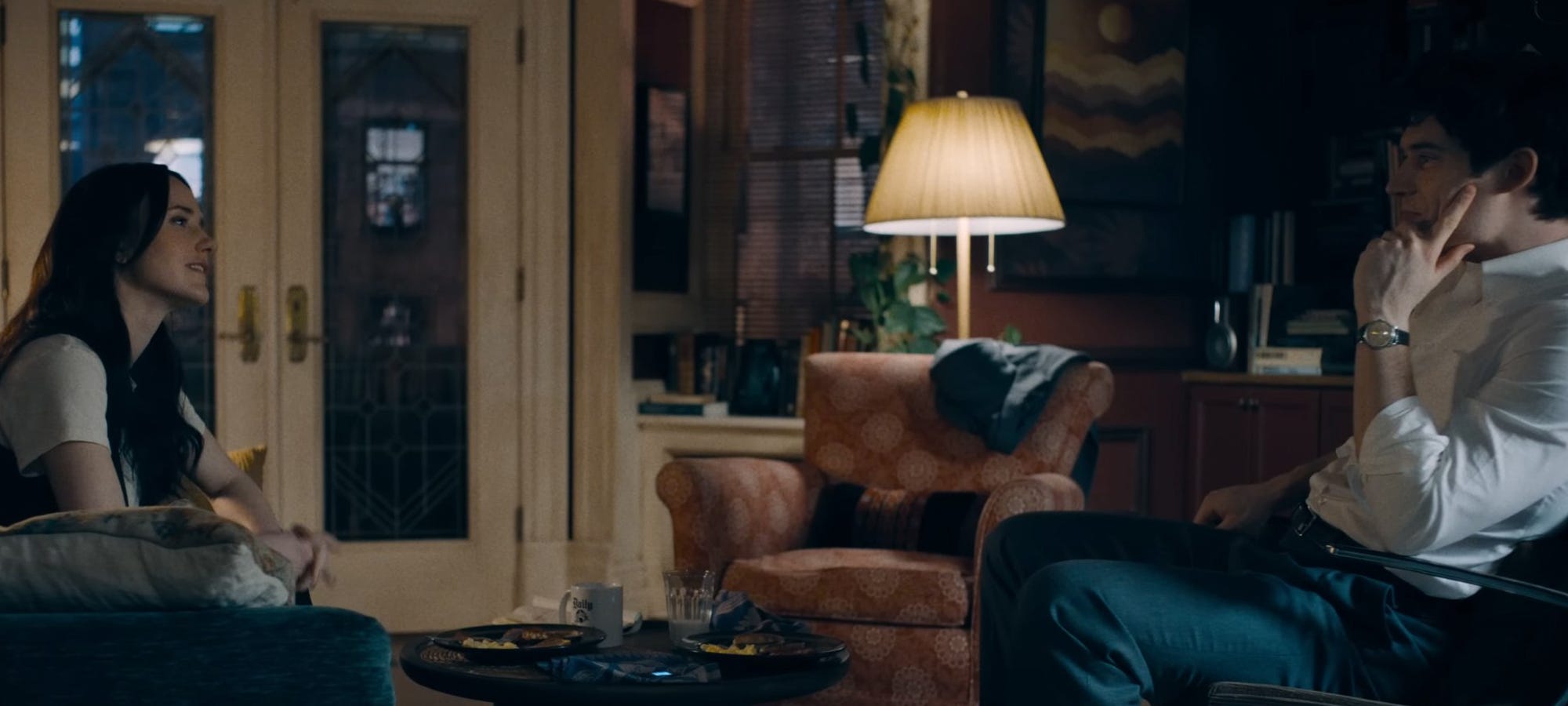
The twelve-minute-long scene where Lois Lane interviews Superman is fascinating for several reasons, not the least of which is the dilemma of journalistic ethics that comes with interviewing one’s romantic interest. Another reason, one most important to this essay, is the framing of power and agency held forth in Lois’ questions and Superman’s answers.
Lois thinks, or sees it as her duty to think, that someone must give Superman permission to do the things that he is on trial for doing—singlehandedly stopping Boravia’s invasion of Jarhanpur.
“You illegally entered a country,” she says. “You seemingly acted as a representative of the United States… Did you consult with the president?”
Superman bristles, probably expecting his crush to cut him some slack. His answers are naïve, guileless. “I wasn’t representing anybody except for me and doing good.”
Lois disguises as advice a critique of Superman’s self-assurance: “I would question myself and consider the consequences...”
Clearly annoyed, Superman snaps. “PEOPLE WERE GOING TO DIE!”
He also calls out Lois’ commitment to the status quo. “You’re being dishonest,” he says, “because you know as well as I do that the Boravian government is not well intentioned.”
“I think that’s almost certainly the case,” Lois admits. “But do I know that?”
wtf do i know?
Lois’ performative lack of assurance seems to permeate our world. If I had to summarize the spirit of the age, I’d describe it as a collective shrug and a muttered (cue Miley Cyrus voice) “what the fuck do I know?”
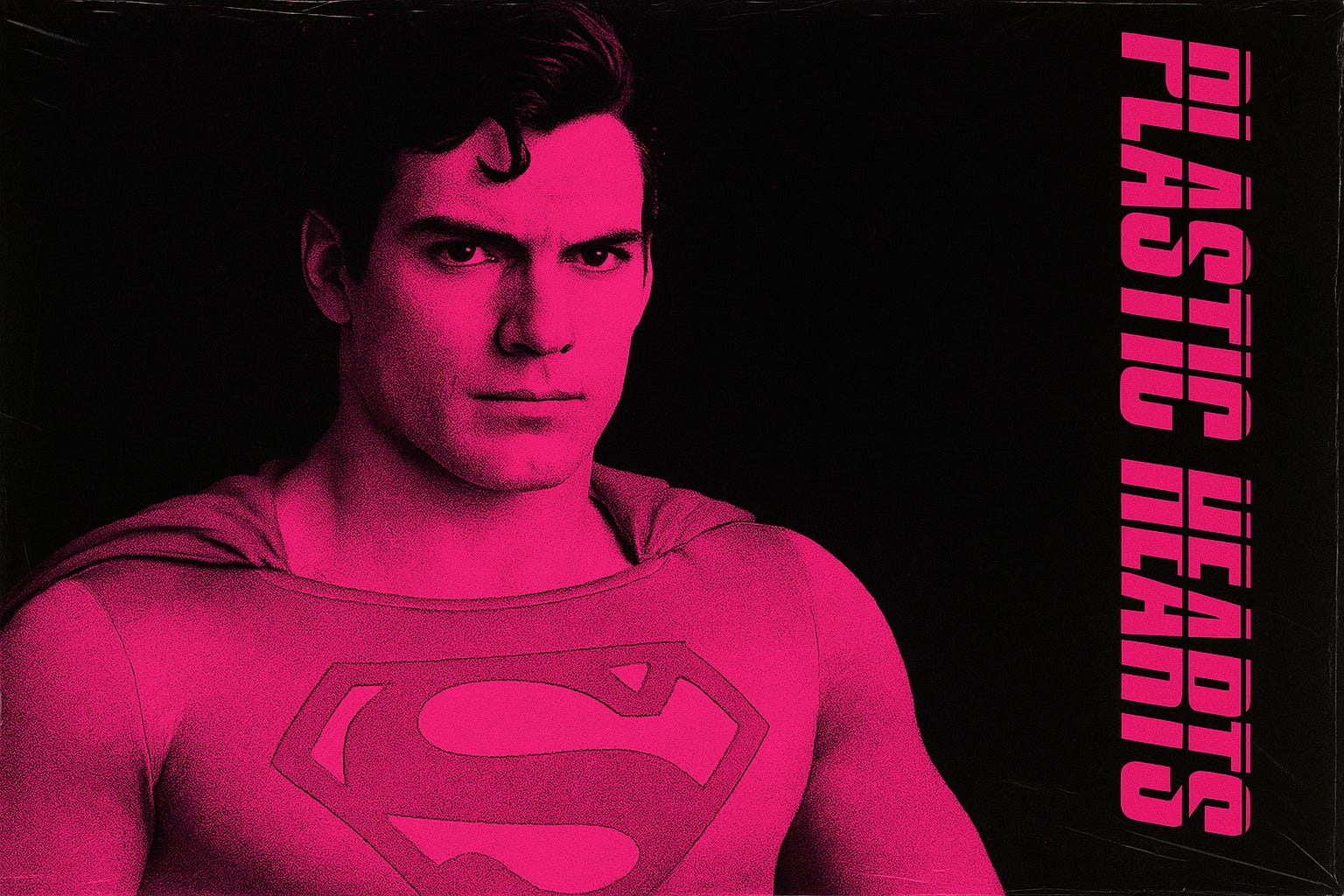
This uncertainty branches into all aspects of society. In romantic relationships and adult friendships, we don’t know how to be and are unsure about the validity of our efforts. We vacillate at the state of business, economics, and politics. In art and faith, we second-guess. Selfhood, personality traits, and various idiosyncrasies are pathologized into paralysis, making entire generations uncertain about themselves, the world, and their place in it.
Our collective lack of assurance reflects in recent prior film treatments of Superman as well as in the larger superhero movie genre. Cynicism and confusion permeate Batman v. Superman and Justice League. Of course, we know who the good guys are, but the aesthetic of cynicism and unsettledness sits like a veneer across the entirety of those stories. In the MCU, this veneer is often hidden by cheap humor and annoying fan-service. (Looking at you, Deadpool & Wolverine.)
This is why we deserve James Gunn’s Superman. It is unabashed in its knowing. Superman’s naivete is his strength. He is uncomplicatedly good. He must save the dog. He must save the girl. He must stop the war if he can. He knows this, somewhere deep inside, and he is frustrated because the rest of the world does not see it so simply.
The rest of the world (our world) constrains itself by the need to ask for permission from the cause du jour, from the government, elites, academia, or influencers. We must be told that what we are doing is allowed before we do anything at all.
The Man of Steel, however, is a man of action and the only thing that slows him down is the revelation that he’s been operating on a flawed mandate. That revelation comes when a message from his Kryptonian parents is revealed in its entirety to the world. Yes, Superman’s parents love him and want him to survive on Earth, but they also want him to attain a harem and eventually rule Earth with an iron fist. They never intended for him to be the all-American good guy.

blessed assurance
Superman’s birth parents not being massively benevolent isn’t a novel concept—there’s precedent in other stories about Kryptonians—but this is the first time what feels like a betrayal is played at scale. On my initial viewing—yes, I went back to see it again—I thought there was no way the film would end without revealing that the message was fake or doctored somehow.
On reflection, what gives Superman its hard edge is that the misanthropic message isn’t undermined after being validated. Clark Kent’s concept of his real parents is really dead and, unlike many a comic book villain, won’t be coming back.
Clark feels that his whole reason for being, his whole base of knowledge about his place in the world, is crumbling beneath him. Not only is he struggling with what to believe about himself; he’s struggling with what others have been led to believe about him.
His adoptive father, Pa Kent, wisely comforts him. “Parents aren’t for telling their children who they’re supposed to be…,” he says. “Your choices, Clark, your actions…that’s what makes you who you are.”
Throughout the story, Superman acts with assurance despite being conflicted. He knows that he is defined by what he does. It doesn’t mean everyone will like him. But there is clarity and light in his action.
Superman is “about a guy who’s doing things he thinks for reasons outside of himself,” James Gunn explains. Later, he “comes to realize through the love of a parental figure…that he is not doing things because of something outside himself. He’s doing things because that’s what he believes. It’s not an outside force telling him what to do or what to think.”
We must become a society of actors—individuals who act, regardless of the outside voices clamoring for our headspace and muddying waters of clarity.
We must return to self-assurance and solid belief that being basically good is not that complicated. We may not have the power of the sun, but we each carry power within our spheres of influence. Wherever we can stand in the way of literal, emotional, spiritual, or metaphorical death, stupidly and naively, we must do so.
We deserve James Gunn’s Superman because we need to relearn what that looks like.
More reading… I thoroughly enjoyed David Armstrong’s comparison of Superman and Fantastic Four…

Great thoughts! I think it’s interesting how what you’ve described could be argued to align with a modern to postmodern to metamodern trajectory. Superman is a quintessential modernist hero. Lois Lane’s questions and lack of certainty around these solid moral categories could obviously reflect a postmodern worldview, though admittedly she does still believe in fundamental truth and justice, which is what binds her to Clark. Ultimately, Superman’s naivety in the film is challenged somewhat by the revelation of his parents being majorly flawed and the mission he built his life around being built on half-truth. Despite this, he finds a way to deconstruct and reconstruct his fundamental mission in a way that is aware of the complex background (and his own fallibility) while re-embracing the sincerity anyway. That’s very metamodern, and I think it reflects Gen Z’s desire to be aware of potential pitfalls and cynicisms while also believing in something despite it all.